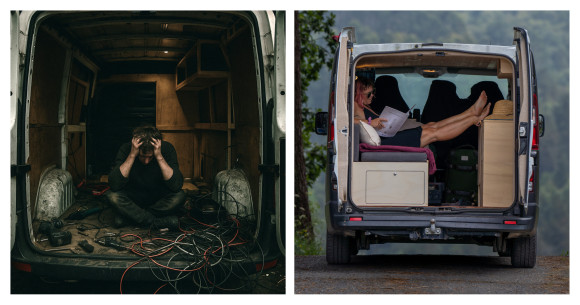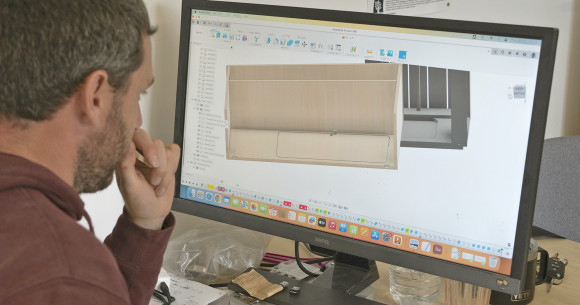

It's early March.
Your summer trip is locked in two or three weeks in July, somewhere warm, somewhere worth the drive. The bare van is sitting on the driveway. You've got the vision. You've got vanlife builds bookmarked for days. The kit is still a link in a browser tab you've had open since January.
July 1st. That's your target. Sixteen weeks away, give or take. Sounds like a lot, right? Let's have a look at what those sixteen weeks actually contain.
Four weekends in March, but one's already spoken for, and one you'll spend recovering from the one before Four in April Easter arrives, relatives arrive, a spring social you said yes to in February arrives Four in May, a bank holiday here, a long weekend there, a garden that's starting to judge you Four in June, wedding season opens, the sun makes you want to do anything except work in a van
Subtract rain. Subtract fatigue. Subtract the Saturday afternoon where you stood in the van for forty minutes, couldn't decide where to start, and went back inside.
You realistically have about 10 proper build days.
Sure, it could be more, but it really can't be much less. So let's say ten days. That's your budget. The question is whether you spend them wisely, or whether you spend them discovering things you should have sorted in March.
Picture the scene: we can, because we've lived it. Mid July. The drill running out of battery in the campsite car park. The cabinet door that's slightly off because the floor wasn't as flat as it looked. Your partner photographing it not because they want to remember the moment, but as evidence. These things happen. They're not a sign you've failed, they're a sign you ran out of time to fix them before July. The good news: this is completely solvable. But only if you're strategic about how you use the time you've got. Here's what a realistic spring build actually looks like.
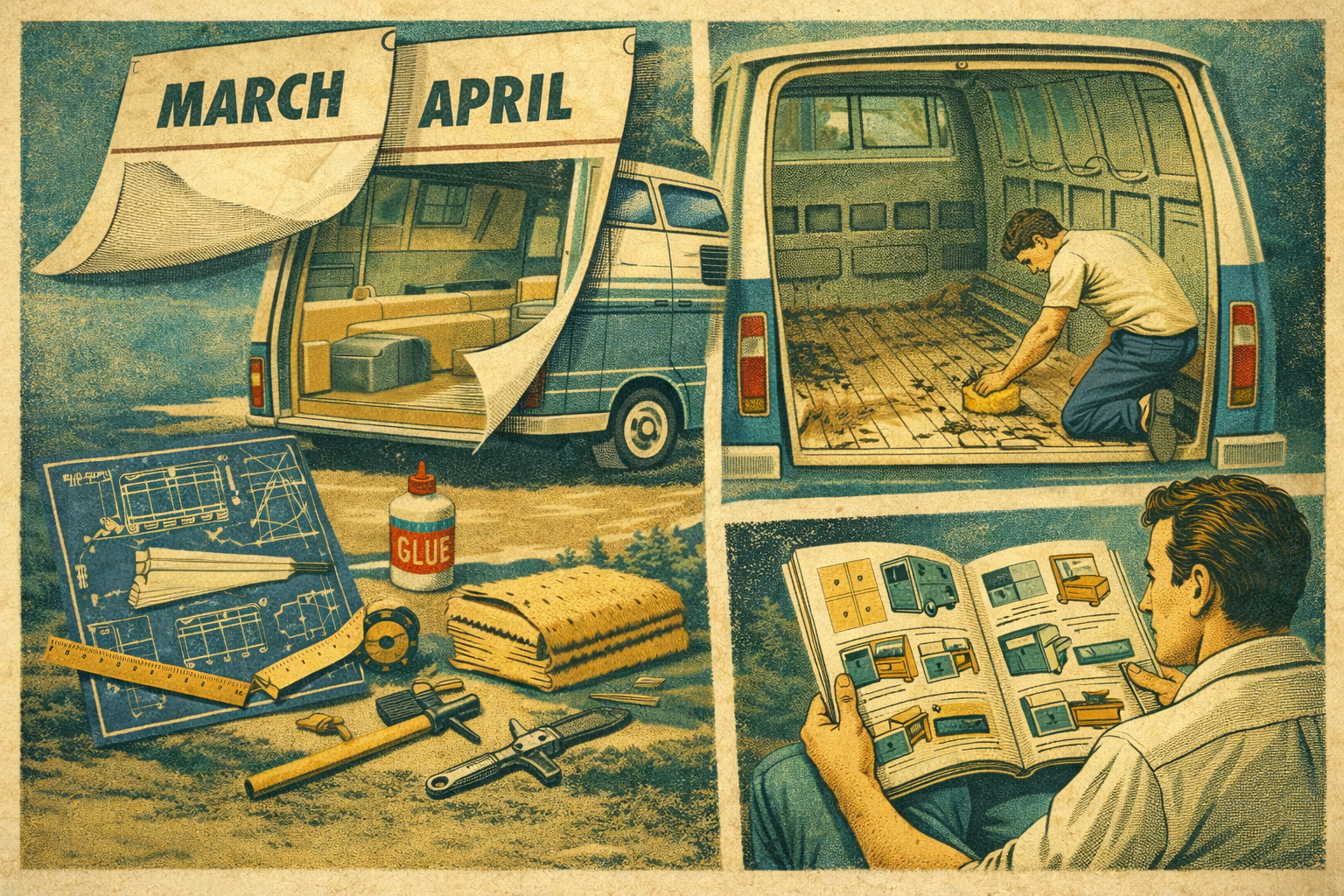
This is five to seven proper build days. Full days, not 'I popped out for a couple of hours.' Tools ready, materials ready to go in. It's not rocket science, but it's focused work.
If you start this in March and finish it by end of April, you're in good shape. If you start it in May, you're in trouble.
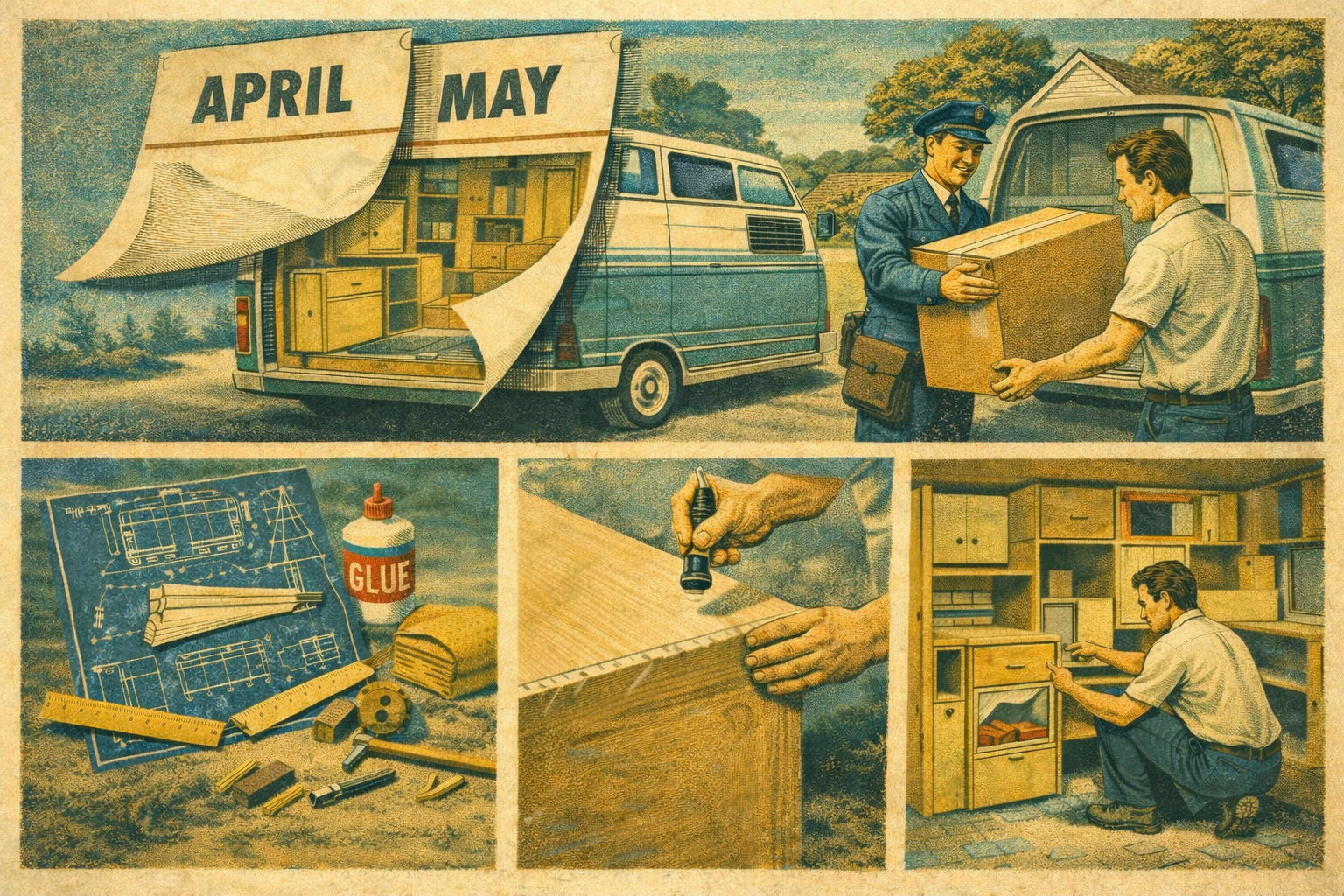
The van is prepped. The surfaces are true. The measurements are right. It's time for the fun part.
If you're using a modular kit, pre-engineered, pre-cut, ready to assemble, the picture is completely different. A Simple Vans kit goes together over a weekend. One or two serious build days if your van is prepped and ready. Three at the outside if you're being meticulous about every fitting.
Phase 2 is the reward for doing Phase 1 properly, and for not spending six weeks reinventing the sliding bed.
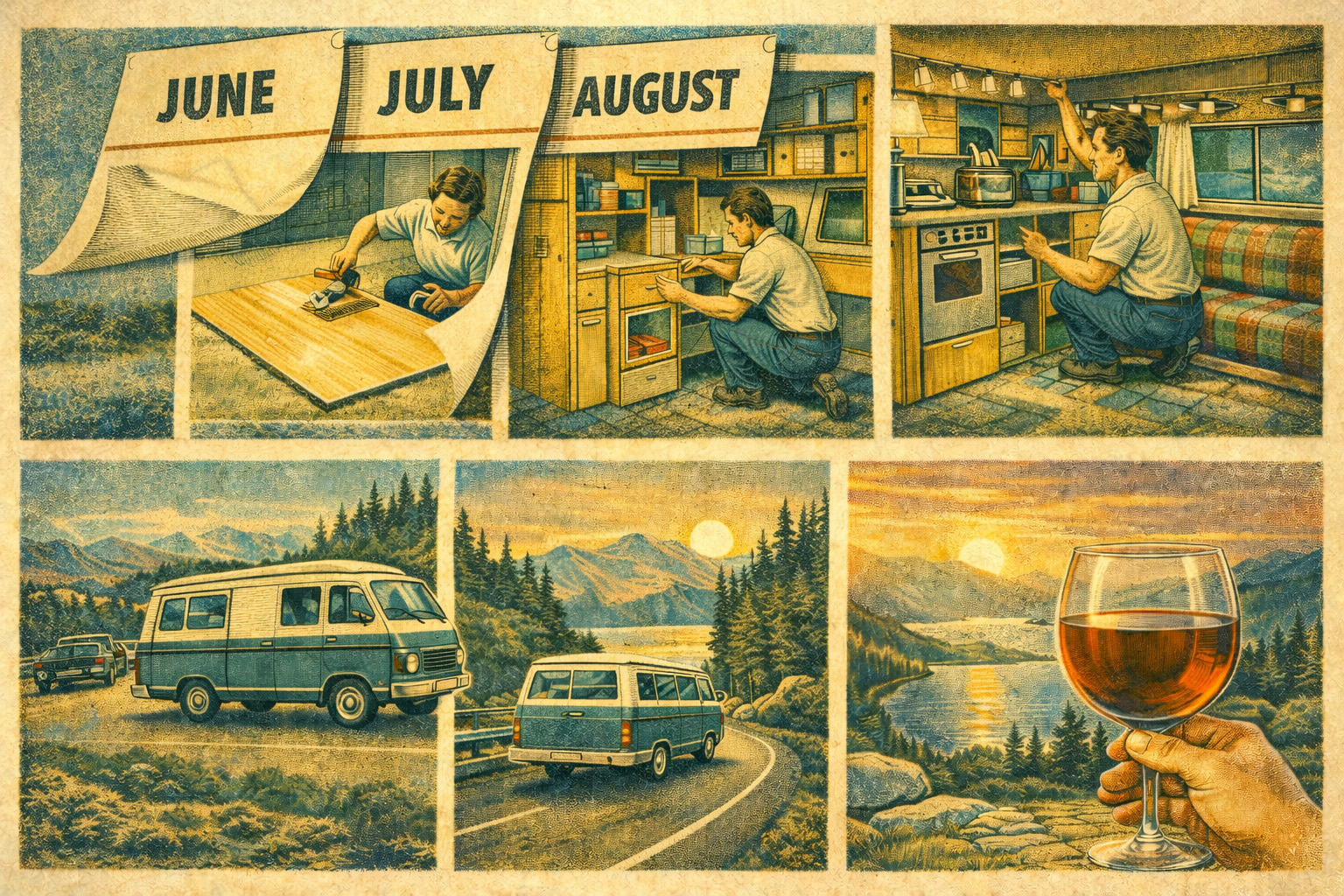

Here's how this plays out when you get the timing right.
You order your kit now. Lead time is short – a couple of weeks – so the kit arrives while you're still in the middle of Phase 1. By the time your structural prep is finished and the ply is lined, the furniture is all ready to go. You've just started, and you've already got your eyes on the finishing line. That's not a flatpack kit, that's motivation in a box.
Insulating Your Campervan: A Simple DIY Guide
Phase 1 starts here. Everything you need to know about insulation and vapour barriers before the ply goes in.
How to Wire Your Camper Conversion: The Simple, No-Fuss Approach
Electric installs can seem pretty daunting to a DIY newbie, but modern tech like lithium power banks and LED lights is making it surprisingly simple.
Which Simple Vans Classic Kit Is Right for You?
If you haven't decided on a kit yet, this is where to start. Walks through the Classic range and helps you match layout to how you actually travel.
How to Finish Your Simple Vans Kit
Plug & Play Camper Conversion Guide

Compatible with all large vans like the Fiat Ducato, Peugeot Boxer, Citroën Jumper, Renault Master, Opel Novano, Nissan NV400, Mercedes Sprinter, Volkswagen Crafter, Iveco Daily...
Compatible with all large vans like the Fiat Ducato, Peugeot Boxer, Citroën Jumper, Renault Master, Opel Novano, Nissan NV400, Mercedes Sprinter, Volkswagen Crafter, Iveco Daily...
By THEME
SIMPLE VANS
USEFUL INFORMATION & LINKS
Compatible with all large vans like the Fiat Ducato, Peugeot Boxer, Citroën Jumper, Renault Master, Opel Novano, Nissan NV400, Mercedes Sprinter, Volkswagen Crafter, Iveco Daily...
Compatible with all large vans like the Fiat Ducato, Peugeot Boxer, Citroën Jumper, Renault Master, Opel Novano, Nissan NV400, Mercedes Sprinter, Volkswagen Crafter, Iveco Daily...
By THEME
SIMPLE VANS
USEFUL INFORMATION & LINKS
Please sign in first.
Sign in