×

From €30 to €5,000: How Much Should You Spend on a Campervan Toilet?

Posted on2026-08-27

We honestly never guessed campervan toilets were going to be such a rabbit hole.

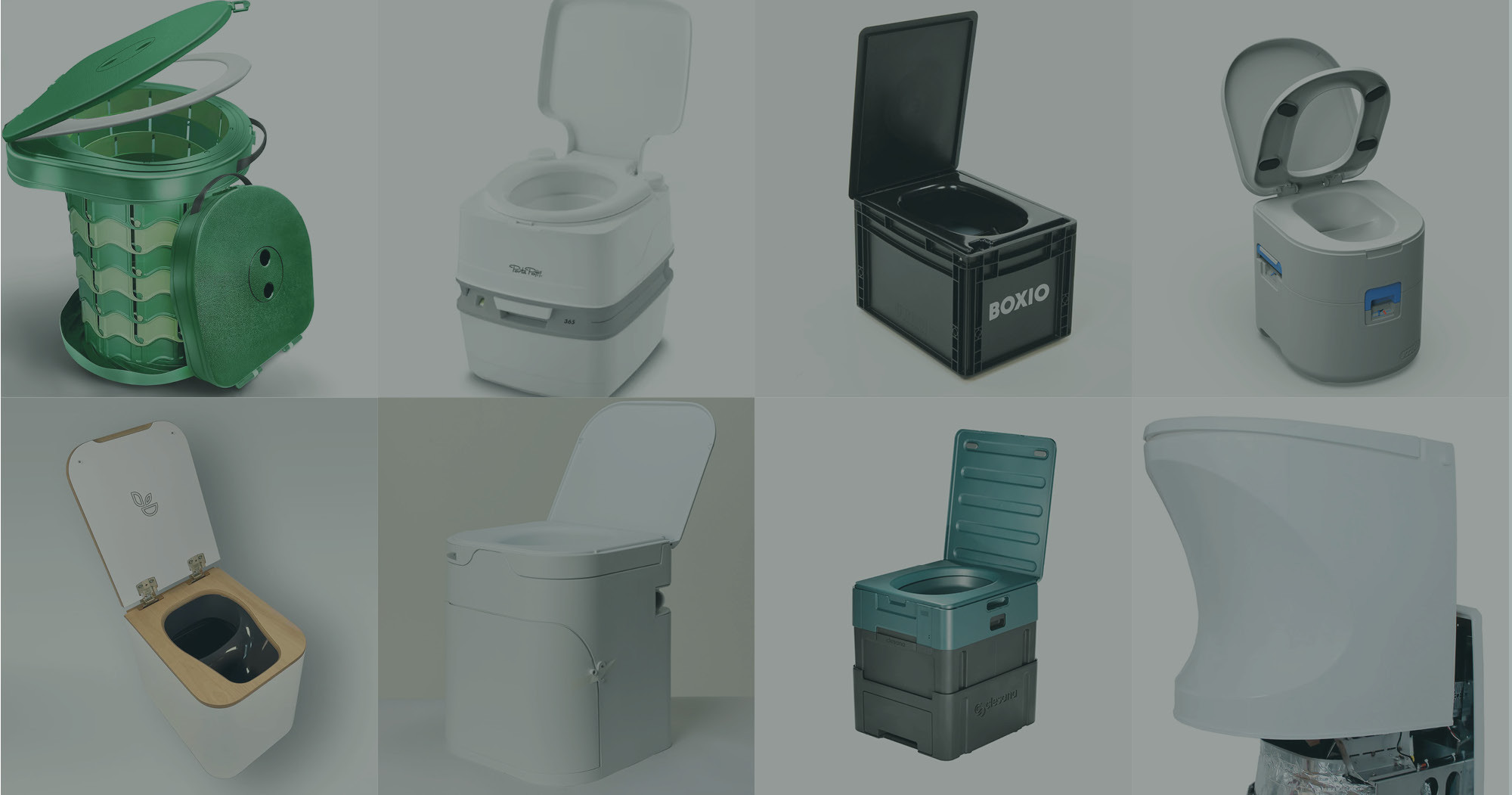
We started out looking for a decent composting toilet. A couple of hours later we'd discovered urine separators, chemical cassettes, collapsible emergency toilets, electric extractor fans, heat-sealed poo parcels and, at the absolute top of the market, a €5,000 Norwegian toilet that simply sets fire to the evidence.

So we changed the question. Instead of asking which campervan toilet is best?, we decided to start at around €30 and work our way up, asking one simple question at every step:

What does spending more money actually get you?

Turns out, quite a lot. Although not always what you'd expect.

Prices approximate: checked August 2026.

First: "composting toilet" doesn't necessarily mean composting toilet

Before we begin, a small clarification.

A lot of products sold as composting toilets don't actually compost your waste inside the toilet.

Most campervan "composting toilets" are better described as dry separating toilets. A moulded separator sends urine into one container and solids into another. Keeping the two apart dramatically simplifies storage and odour management, while the solids are normally collected in a bag or container for later disposal or composting where appropriate.

Actual composting takes time and the right conditions.

So throughout this article we'll use "separating toilet" where that's what the product really is.

Right. Let's go to the toilet.

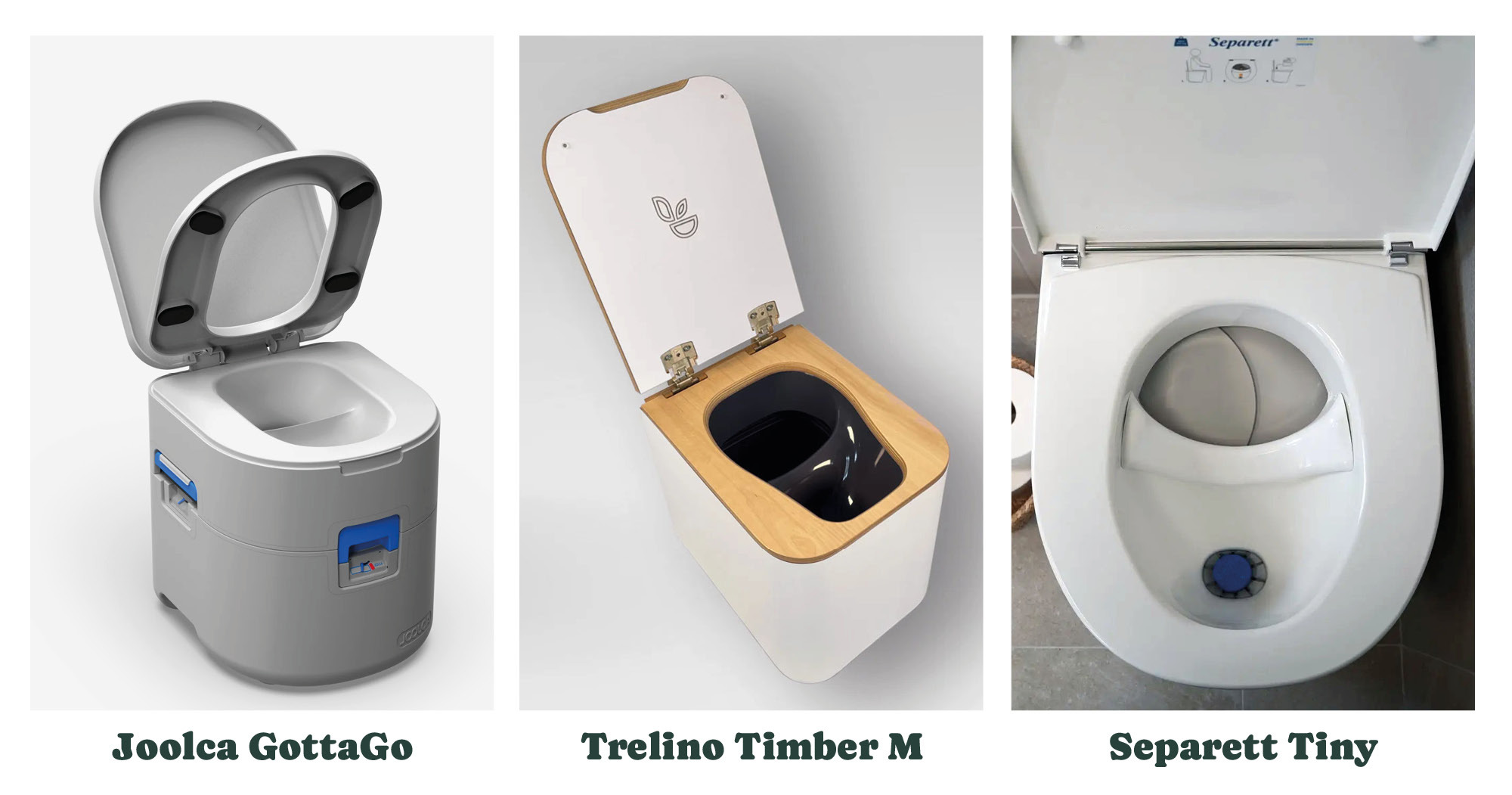
€299: Joolca GottaGo

Now things get interesting.

The extra ~€120 gets you:

+ A proper removable cassette system + A sealed solids cassette + Three waste-management modes + Easier transport and emptying

The Joolca GottaGo costs €299 in Europe and can operate as a separating, chemical or bag toilet. Replacement Eco and chemical cassettes are €69, meaning you can even carry a spare cassette on longer trips.

This is clever. Rather than simply dropping everything into an open bucket, Joolca has engineered a removable cassette system that can be sealed for transport.

On paper, we love it. Then we looked at the hole.

The poo aperture problem

The GottaGo's clever airtight cassette arrangement leaves a relatively defined opening through which solids need to travel. Which introduces a question we'd never previously considered when evaluating campervan equipment: How good is your aim?

With something like the €140 BilaBox, there's a big opening with a bag-lined bucket immediately underneath. With the GottaGo's mechanical latch opening, there's more sloping plastic around the hole. This means it will require regular cleaning: the toilet even comes with a dedicated 'poo stick' for this purpose.

This doesn't make the GottaGo a bad toilet. Far from it. Its sealed cassette system is one of the cleverest solutions we've seen at this price. But it demonstrates something important: More engineering doesn't automatically mean less interaction with poo.

Sometimes the €140 toilet is doing something the €300 one isn't.

~€400 to €700: paying for furniture, not function

The extra €130 to €250 gets you:

+ Better materials + More substantial construction + More capacity, if you want it + Something that doesn't look like camping equipment

This is the aesthetic upgrade zone. The German brand Trelino builds some of the best-finished dry separating toilets on the market. The plywood, portable Timber S costs around €540, and the elegant Timber M will set you back €670.

The design has not fundamentally changed since the €140 toilet: you are paying for construction, durability, design and integration. But purely in terms of where the poo goes? We're still separating it and putting it in a container.

Which brings us to the first genuinely major technological jump since urine separation.

~€900: Separett Tiny

The extra €300-ish gets you:

+ Continuous powered extraction + External ventilation + Larger capacity + Proper permanent installation + Serious odour control

Now we're actually buying something fundamentally different.

The Swedish Separett Tiny is designed specifically for compact spaces including campervans and boats. The version with an internal urine container currently costs €899.95 in Europe, while the version with an external urine hose is €879.95.

And the big difference is the fan.

The Tiny continuously draws air through the toilet and exhausts it outside. It can run from 12V and Separett quotes energy consumption of just 0.04 kWh per 24 hours.

That changes the game. Instead of merely trying to contain odour, we're actively removing it from the van. For a permanent camper installation, that's compelling. The downside is installation.

You now need power and ventilation ducting through the vehicle. Depending on the version, you'll also be dealing with either an internal urine container or a drainage hose.

But this is probably the first point on our ladder where spending substantially more money buys a substantially different capability.

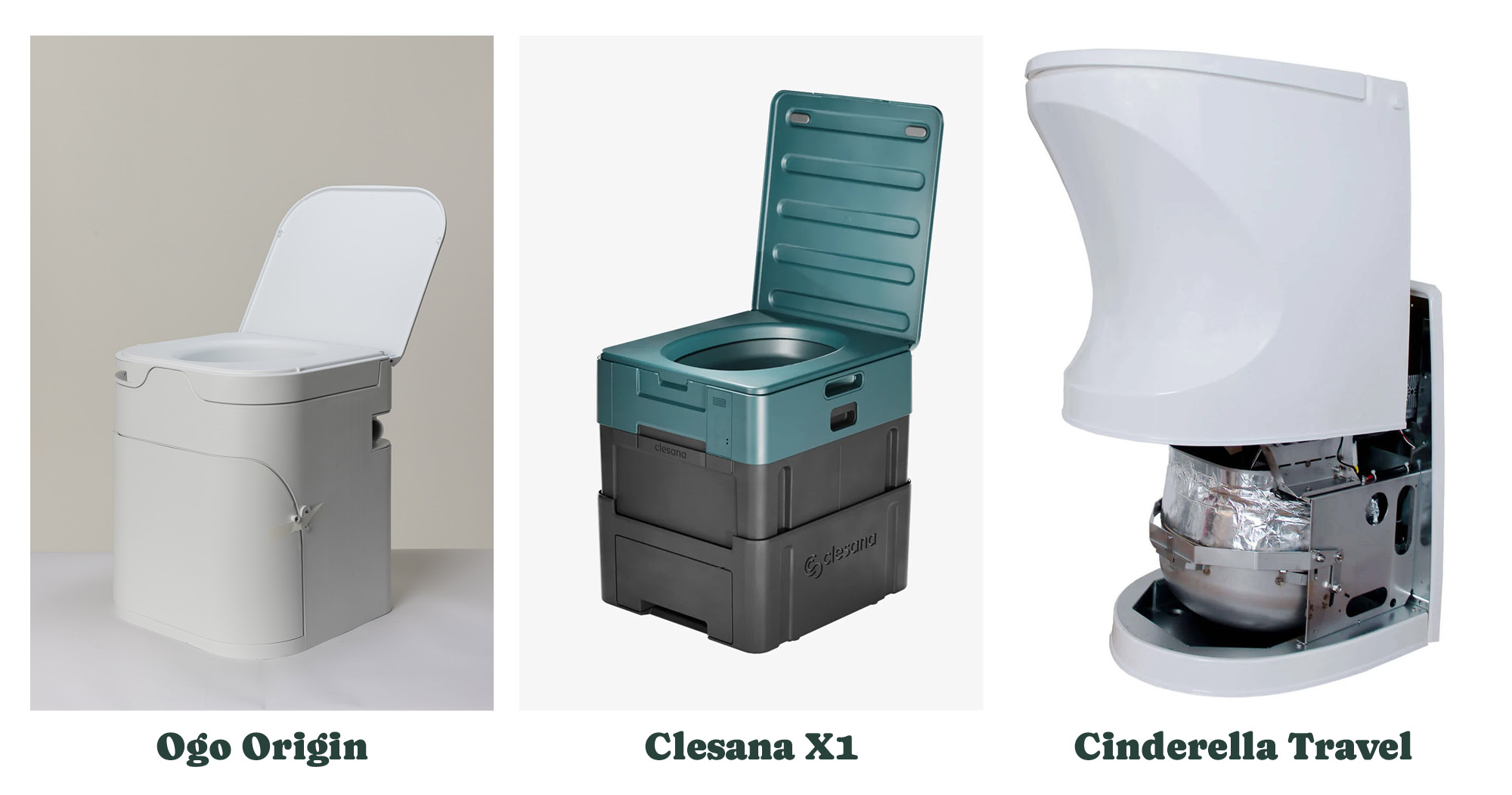
~€1,350: OGO Origin

We have now entered the electrically assisted poo era.

The extra few hundred euros gets you:

+ Mechanical agitation

Yes. Your toilet now stirs things. The OGO approach uses an electrically powered agitator to mix solids with a composting medium rather than simply collecting everything in a static bucket. There's logic behind this. Mixing helps distribute moisture and material through the solids container.

But take a moment to appreciate how far we've travelled.

At €30, we dug a hole. At around €1,350, we've introduced electromechanical poo management.

And we're still not finished.


~€1,450: Clesana X1

The Swiss have arrived. And they've brought packaging machinery.

The extra ~€100 gets you:

+ No urine separation + No chemical cassette + No solids bucket + Automatic heat sealing + Individually packaged deposits

The Clesana X1 takes an entirely different approach.

Instead of separating or composting anything, it uses barrier film to hygienically seal toilet waste into bags.

This is objectively impressive.

You use the toilet, just like a regular one. Once you're finished, the machine closes, seals and clips the bag, and drops it into the storage bay: up to 36 "small" or 26 "big" uses. You eventually remove a collection of hygienically packaged contributions. No black water. No separating funnel. No bucket of sawdust. No aiming and no cleaning.

Of course, you have now introduced proprietary consumables and a fairly sophisticated electrical appliance into a job traditionally accomplished with a €5 plastic bucket. But there is no denying it. Your poo now has packaging.

Surely we've reached peak toilet?

No. No we have not.


~€4,800: Cinderella Travel

Ladies and gentlemen, we have arrived.

What does the extra €3,350 get you?

Fire.

The Norwegian Cinderella Travel is an incinerating toilet designed specifically for motorhomes and caravans.

No waste cassette. No black-water tank. No urine separator. No bucket full of yesterday. It burns it.

Current European prices are around €4,300 to €4,900 depending on supplier and version. The Travel is available in gas and diesel configurations and requires 12V electricity plus an air inlet and exhaust installation.

You place a liner in the bowl, use the toilet and initiate the incineration process. Urine, faeces and toilet paper are reduced to a small quantity of dry ash. One European Cinderella dealer says four people can use the toilet for approximately a week before the ash container needs emptying.

Which means that after spending almost €5,000, Scandinavian engineers have finally solved the problem by comprehensively destroying the evidence.

We respect that.

The bit nobody puts in the brochure: where do you empty it?

Every toilet on this ladder eventually needs emptying, and this is where the marketing photography stops.

Chemical cassettes go to a dedicated disposal point. Most campsites and motorhome aires have one. Never empty a treated cassette into a normal toilet, a drain or a hedge.

Urine is the part people underestimate. A 4 to 5 litre container fills faster than you'd think with two people on board, which in practice means finding somewhere every day or two. Diluted urine can normally go down a toilet. Away from campsites, the usual advice is well away from water, paths and pitches.

Solids go into general waste in a sealed compostable bag, unless you genuinely have somewhere to compost them properly, which almost nobody does while travelling.

Cover material is the running cost nobody mentions. Coco coir compresses into small bricks, absorbs well and controls odour better than sawdust. Budget a brick or two per trip.

And on smell: a well-managed separating toilet really doesn't stink, because urine and solids only smell strongly once they're mixed. Get the separation wrong, or leave the urine container a day too long in August, and you'll understand exactly what the Separett's fan is for.

So what does spending more actually get you?

After disappearing down this particular rabbit hole, our toilet technology price range varies from €30 to €5,000. Which raises the obvious question: where's the sweet spot?

We don't think there's one answer.

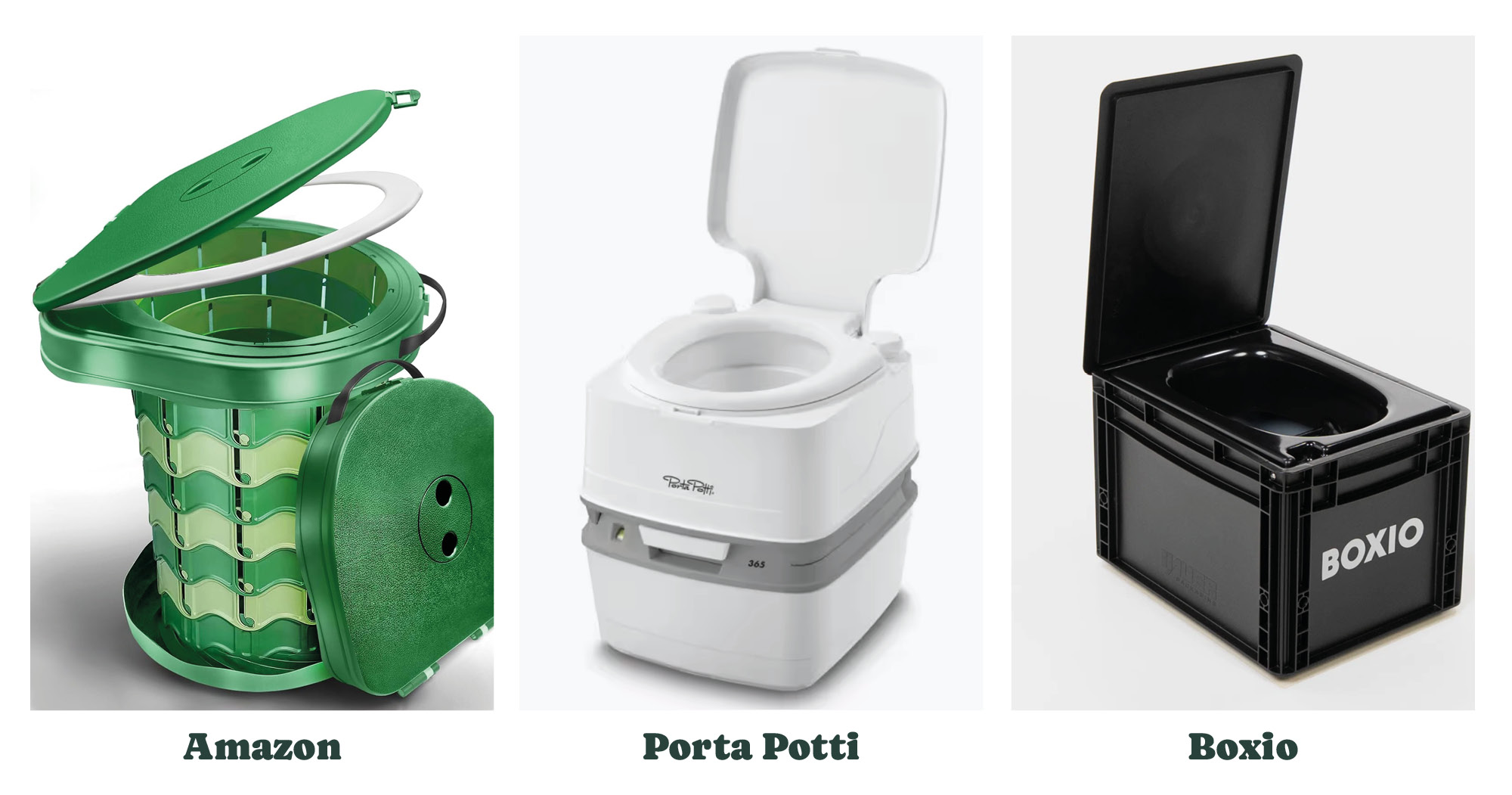
For many, a cheap folding job off Amazon does everything you need and won't take up space or budget.

For the camper who mainly stays on campsites, the boring €90 Porta Potti remains remarkably difficult to argue with.

For regular off-grid travelling, we're increasingly attracted to the simple separating toilet. No water, no chemicals, no complicated mechanism and, ideally, a large uninterrupted route between backside and bucket.

If you've got a bigger budget, the Clesana is a seriously impressive toilet for anyone who really doesn't want to interact with stored waste, clean the bowl or detect odours.

And the Cinderella? If your campervan toilet budget is roughly the same as some people's entire campervan, congratulations. You can burn your poo.

Before you buy: where does it actually live?

There's another question that comes before price: where does the thing go?

A portable toilet needs somewhere to sit that isn't the middle of your floor. A Separett needs power and an exterior wall to duct through. And in a small van, the honest answer is often that a toilet displaces something you'd rather keep.

Which is why we design portable toilet storage into our kits rather than leaving you to find room afterwards.

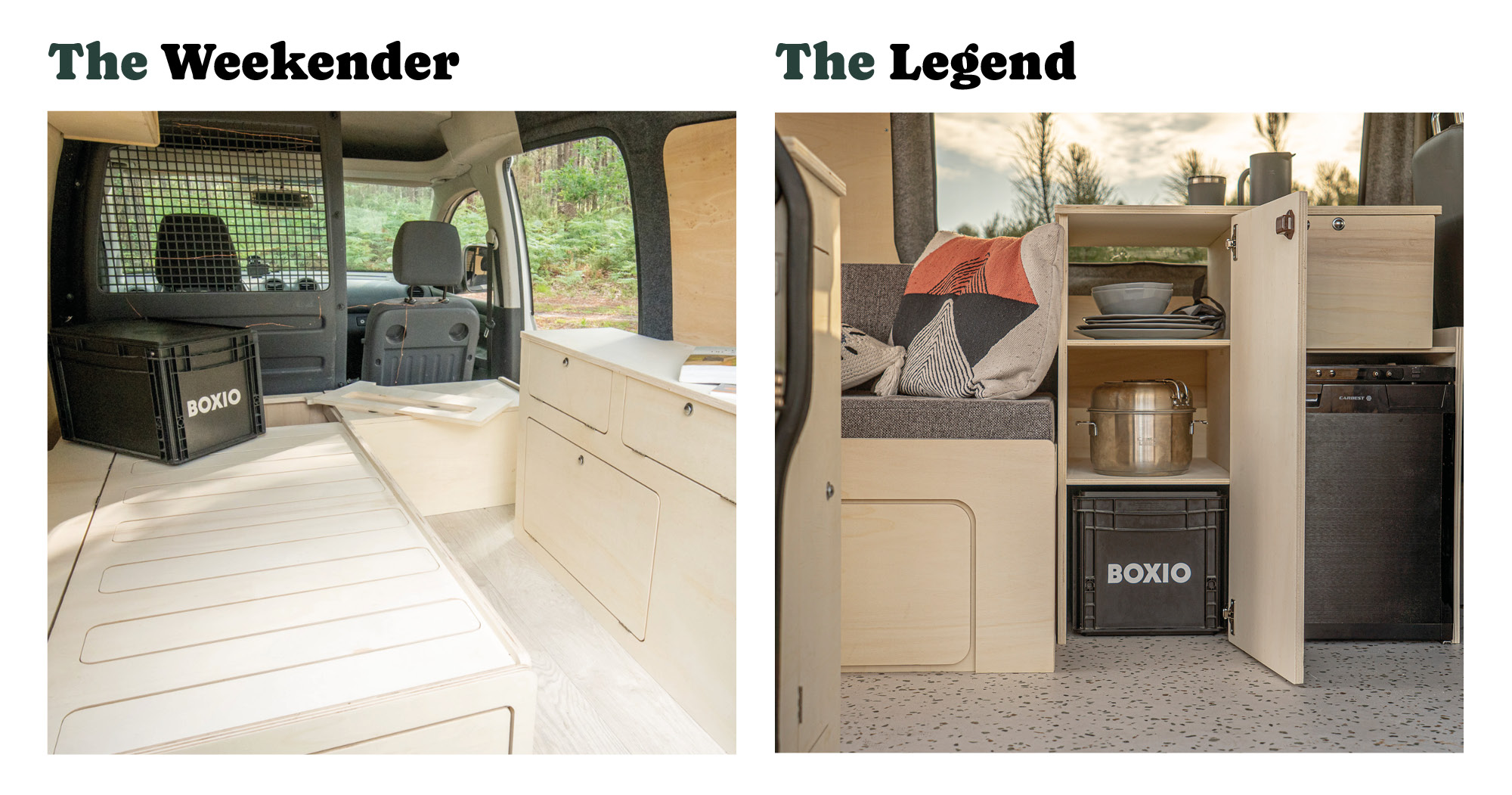
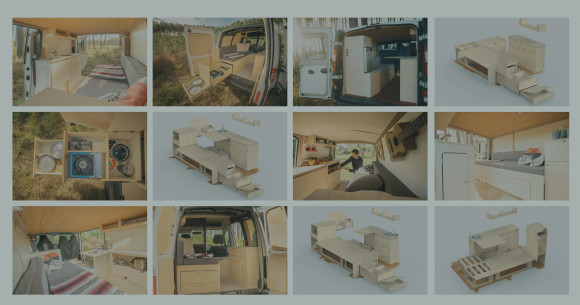
Our Weekender kit has storage under the bed that will take a BOXIO or Porta Potti, as do our Roamer and Legend kits for medium vans. The other Classic kits don't have a dedicated toilet space, and we'd rather tell you that now than after you've bought one. Our Plus range for large vans has large modular cupboard units that are perfect for stashing a portable toilet.

One final lesson from the rabbit hole

We began this search assuming that the more expensive toilets would simply be better versions of the cheaper ones.

They're not.

They're different philosophies.

Bag it. Separate it. Dry it. Seal it. Stir it. Package it. Burn it.

And strangely, after looking at toilets costing everything from €30 to nearly €5,000, the feature we've come to appreciate most isn't an electric fan, heat sealer or combustion chamber.

It's simplicity. Sometimes the best engineering is less engineering.

Related products
€1,949.00 (tax incl.)

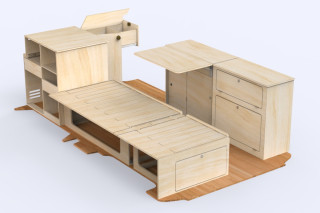
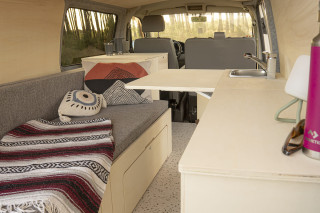
Built for extended trips in L2 long-wheelbase medium vans, The Legend gives you a large slider bed that converts to a bench or L-shaped sofa, with serious storage below. The spacious side cabinet has a large pop-up table, while the XL front kitchen unit provides tons of cupboard space for cooking essentials, ventilated storage for a portable stove and fridge, and even a handy fold-out workstation.

Units: B130 + C6 + A3v2
Deluxe: +water kit, D6, D8, D1

See our Buyer's Guide

Related articles

Menu

MENU