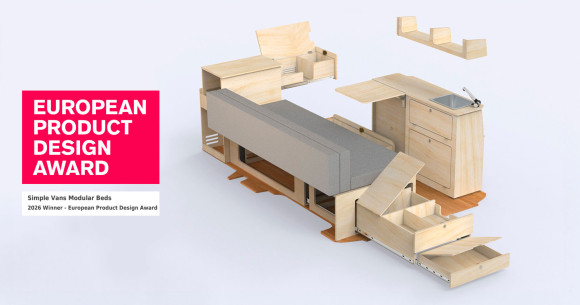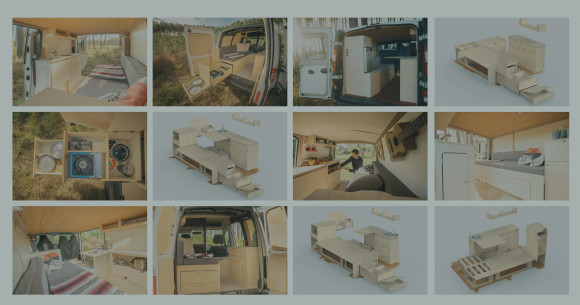
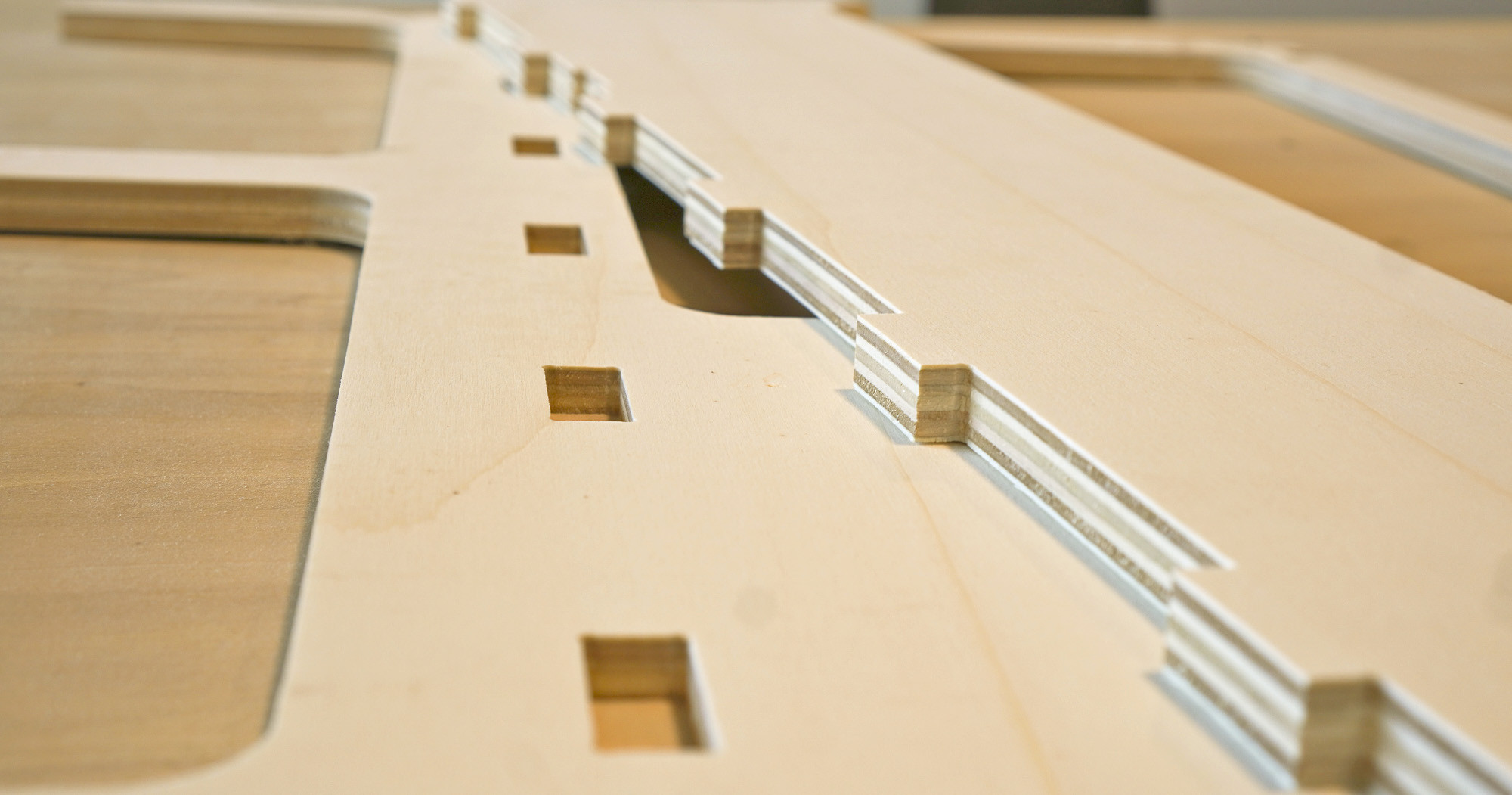
At Simple Vans, we build flat-pack campervan furniture for people who want something that feels smart, solid, and properly resolved — not improvised, and not so overbuilt it turns your van into a wardrobe on wheels.
That only works because of how the furniture is made. Every panel in a Simple Vans kit is CNC-cut from plywood and designed to fit together through Simple Slots: interlocking slots, tabs, and carefully planned joinery. That gives us something very hard to achieve with rough manual cutting or basic screw-and-bracket construction — repeatability, clean fit, more intelligent joint geometry, and a finished result that feels engineered rather than assembled.
A lot of furniture can look good in a photo. The test is what happens when you start using it. Do the parts line up properly? Do the joints fit cleanly? Does the whole thing stay square and solid once it is carrying weight, being climbed on, slept on, and driven over bad roads?
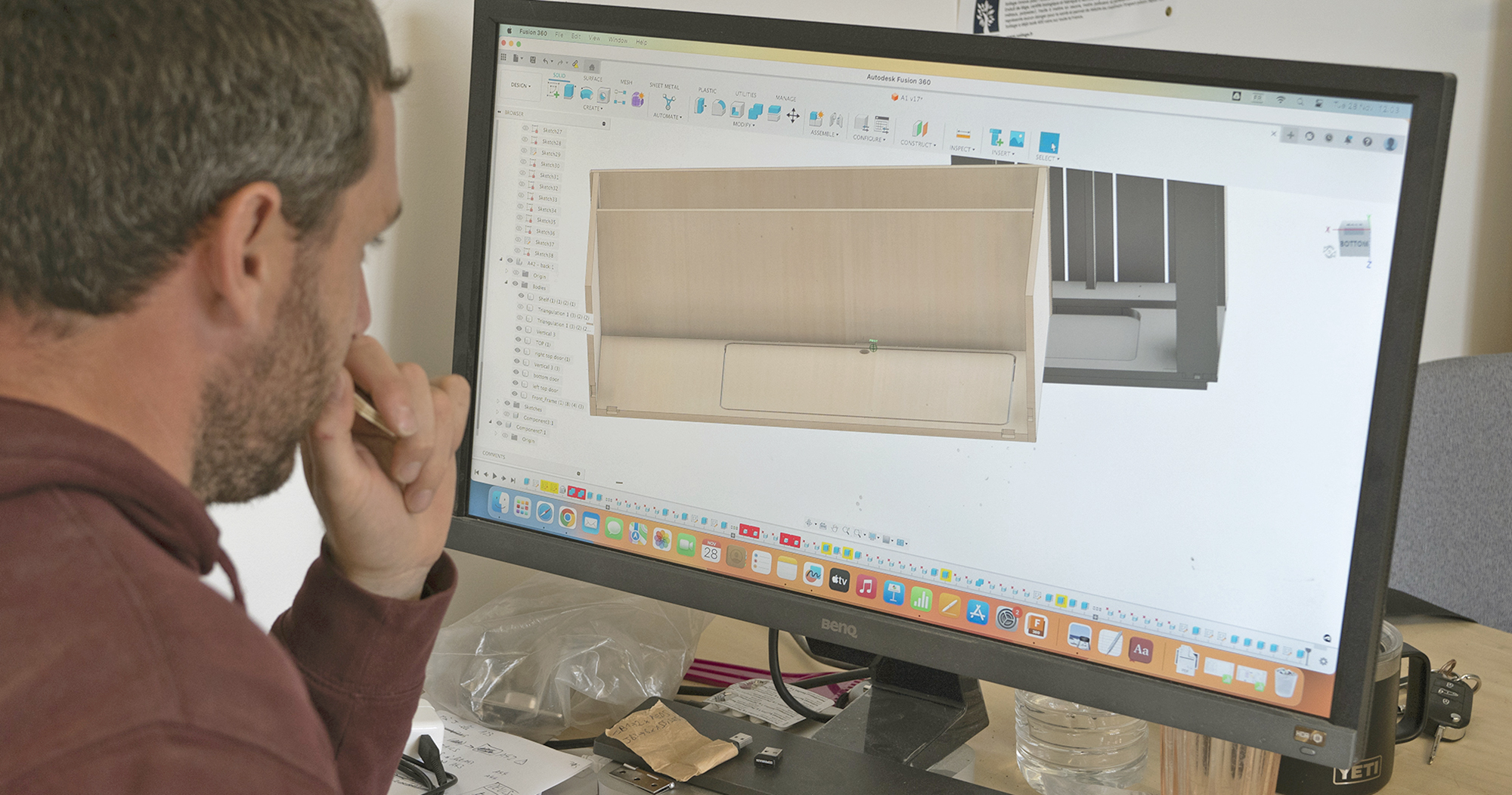
That is where CNC earns its keep. Research published in BioResources (Uysal, Tademir, Haviarova, and Gazo, 2019) found that CNC router manufacturing offers "high machining accuracy" and enables "more precise and complex shaped geometry" compared with conventional approaches. The key advantage is not just that a machine does the cutting — it is that CNC allows the same part to be produced again and again with a level of dimensional consistency that is extremely difficult to achieve manually, especially when the design depends on accurately milled slots, shoulders, and interlocking details.
In flat-pack furniture, that consistency is not a luxury. It is the whole game.
A lot of van furniture relies on a familiar formula: screws, angle brackets, cleats, and enough fixings to make it feel reassuringly industrial. That can work. But it concentrates force into a handful of mechanical points rather than spreading it through the joint itself.
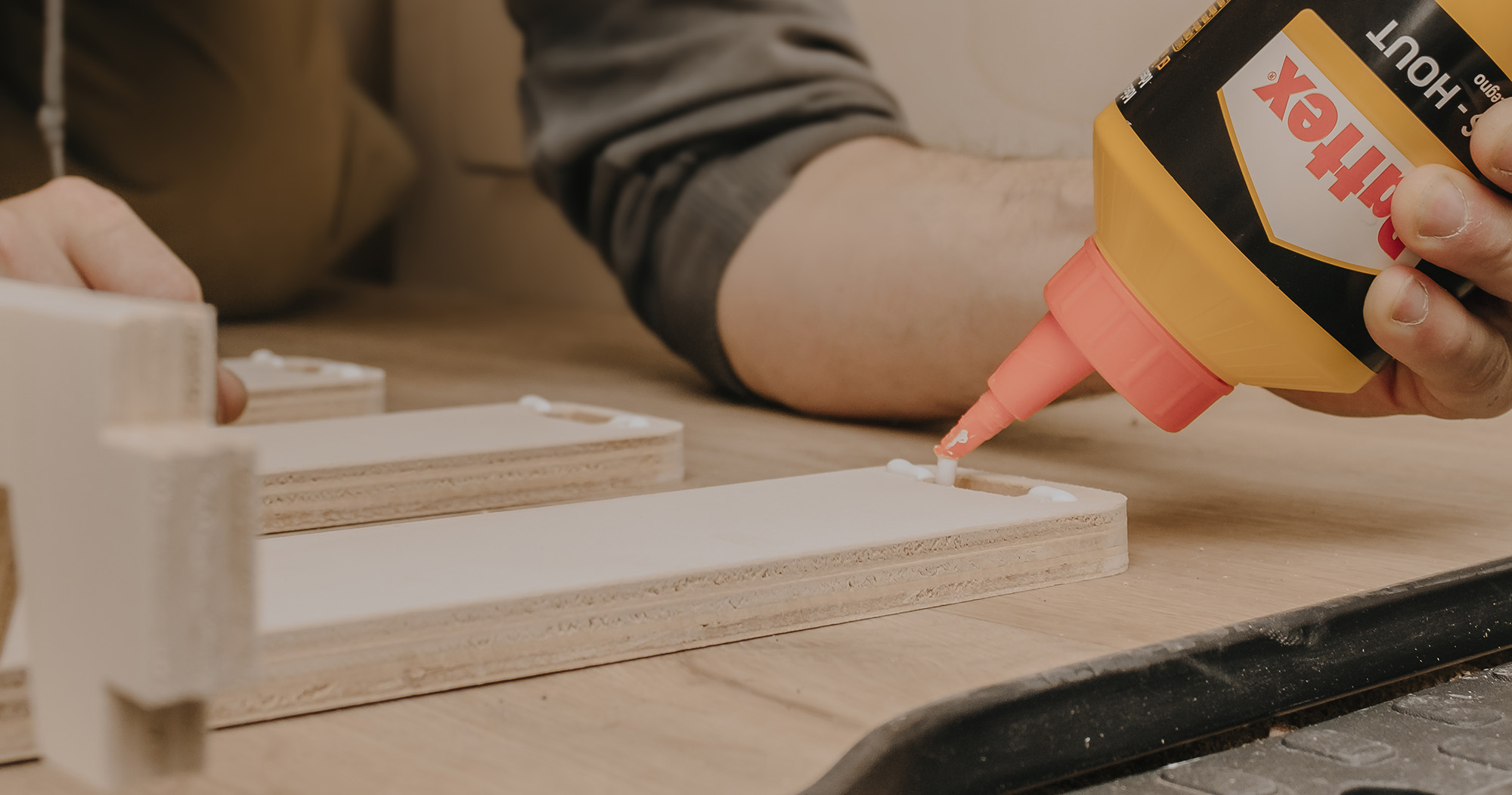
The more effective alternative is to make the geometry do more of the work. A 2024 study in the journal Forests (Ba et al., Article 343) compared glued loose-tenon joints with connector-based alternatives across multiple test conditions. In one configuration, the withdrawal resistance of the glued joint was approximately twice that of the connector version — 1,842 N versus 917 N. The authors described the glued loose-tenon solution as a "robust and reliable permanent connection."
The principle is consistent: good geometry, accurate fit, and adhesive bonding can create a genuinely strong structure, not just one that feels solid when you press it in a showroom.
This is where CNC changes the conversation. The same BioResources study found that several CNC router-cut interlocking joints achieved equal or higher strength relative to traditional joints in compression testing. The researchers attributed that performance to more complex geometry and what they described as "a better self-locking system."
That matters because van furniture does not live a quiet life. It deals with braking, cornering, uneven loading, vibration, and the daily physical demands of life on the road. A self-locking joint geometry is not a feature — it is the right engineering response to that environment.
The study also found lower relative performance in tension than compression, which is worth knowing. It means the geometry of the design matters: CNC is not a blanket upgrade, it is a tool that rewards careful design thinking. That is exactly the kind of trade-off we work through at the design stage, before the furniture reaches you.
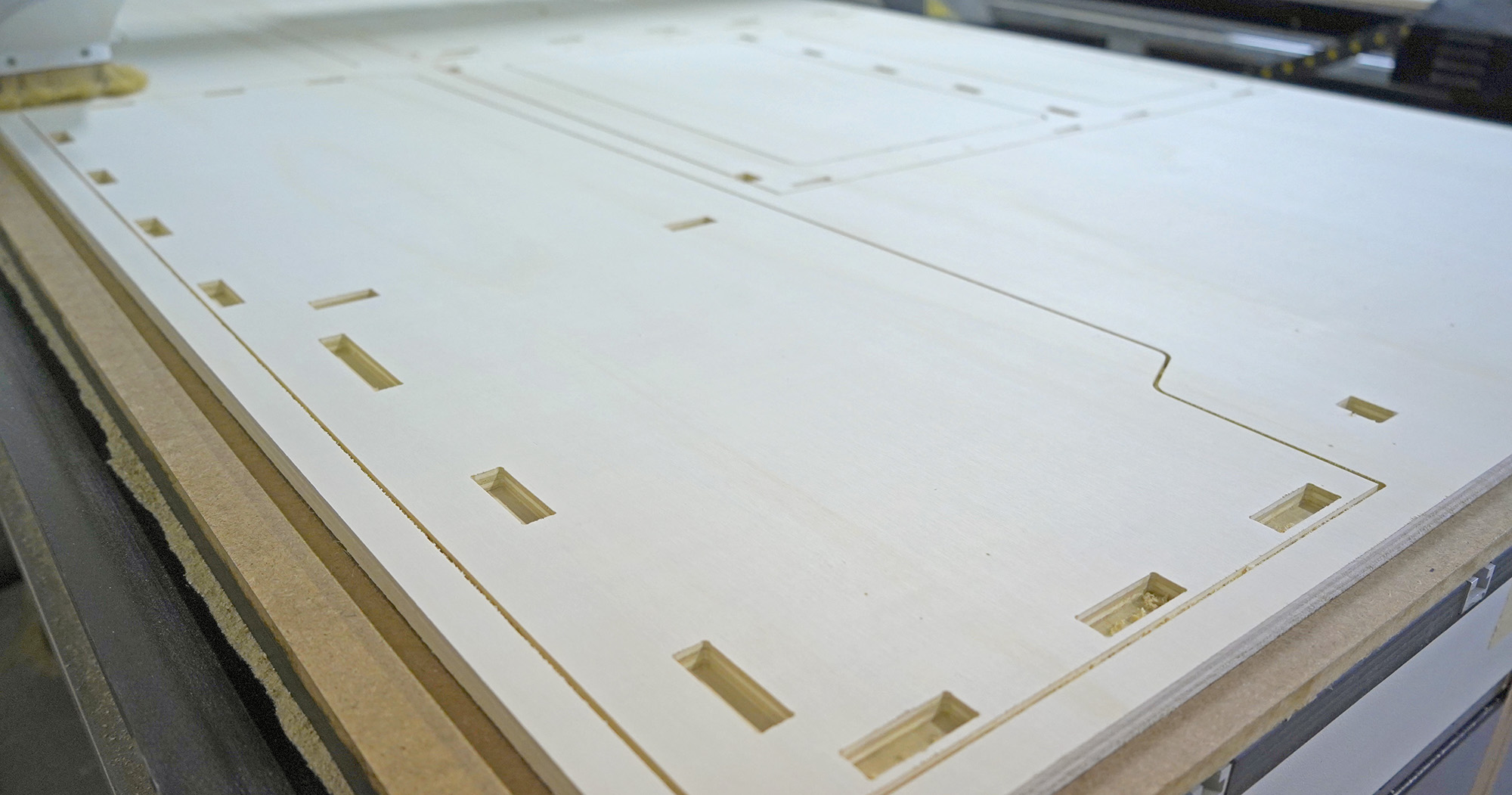
One of the nicest side effects of interlocking CNC-cut joinery is visual. When the structure is built into the joint itself, you need fewer external reinforcements. Fewer exposed brackets. Fewer visible fixings. Fewer moments where the furniture looks like it was rescued halfway through a garage experiment.
The BioResources paper also notes that material type and joint design are among the primary drivers of processing time and manufacturing yield. Because Simple Vans parts are digitally designed and nested before cutting, material is used more systematically — less off-cut waste, fewer compromises than cut-as-you-go methods.
The material itself matters. We use PEFC-certified plywood because PEFC certification is built around something concrete: traceability. PEFC's chain-of-custody framework tracks forest-based products from sustainably managed sources through the supply chain to the finished product. PEFC is one of the world's largest forest certification systems, covering over 750 million hectares of certified forest across more than 50 countries — which means the certification claim is backed by an independently verified, globally recognised standard, not marketing copy.
That commitment goes further. Since 2024, Simple Vans has been a member of 1% for the Planet, donating 1% of annual revenue to environmental protection and biodiversity projects.
The real advantage of CNC is not that it sounds modern. It is that it shifts the hard work away from the customer and into the design itself. The fit, the repeatability, the joint logic, the structural thinking, the material efficiency — all of that has already been resolved before the box arrives. That is why we use it. Because it lets us build van furniture that is cleaner, smarter, and more robust than the usual pile of brackets and boards.

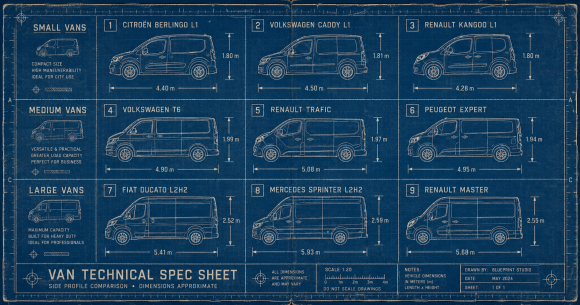
Compatible with all large vans like the Fiat Ducato, Peugeot Boxer, Citroën Jumper, Renault Master, Opel Movano, Nissan NV400, Mercedes Sprinter, Volkswagen Crafter, Iveco Daily...
Compatible with all large vans like the Fiat Ducato, Peugeot Boxer, Citroën Jumper, Renault Master, Opel Movano, Nissan NV400, Mercedes Sprinter, Volkswagen Crafter, Iveco Daily...
By THEME
SIMPLE VANS
USEFUL INFORMATION & LINKS
Compatible with all large vans like the Fiat Ducato, Peugeot Boxer, Citroën Jumper, Renault Master, Opel Movano, Nissan NV400, Mercedes Sprinter, Volkswagen Crafter, Iveco Daily...
Compatible with all large vans like the Fiat Ducato, Peugeot Boxer, Citroën Jumper, Renault Master, Opel Movano, Nissan NV400, Mercedes Sprinter, Volkswagen Crafter, Iveco Daily...
By THEME
SIMPLE VANS
USEFUL INFORMATION & LINKS
Please sign in first.
Sign in