Buying your first van is one of the most paralysing decisions in the whole conversion journey. The van sets the ceiling for everything that follows. You can't add length, width, or headroom that isn't already there.
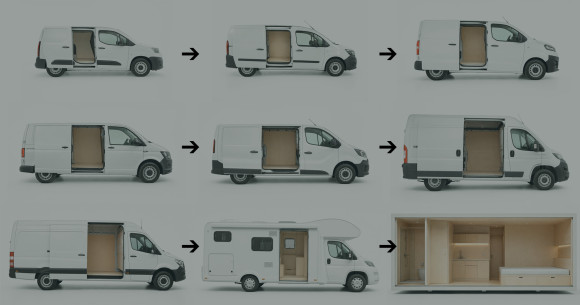
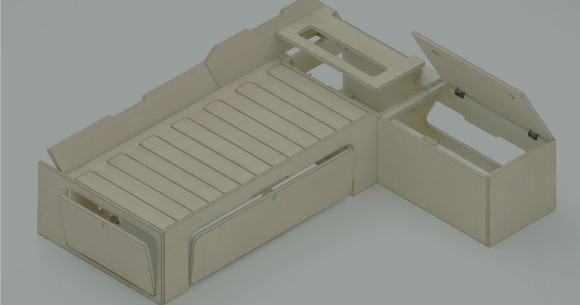
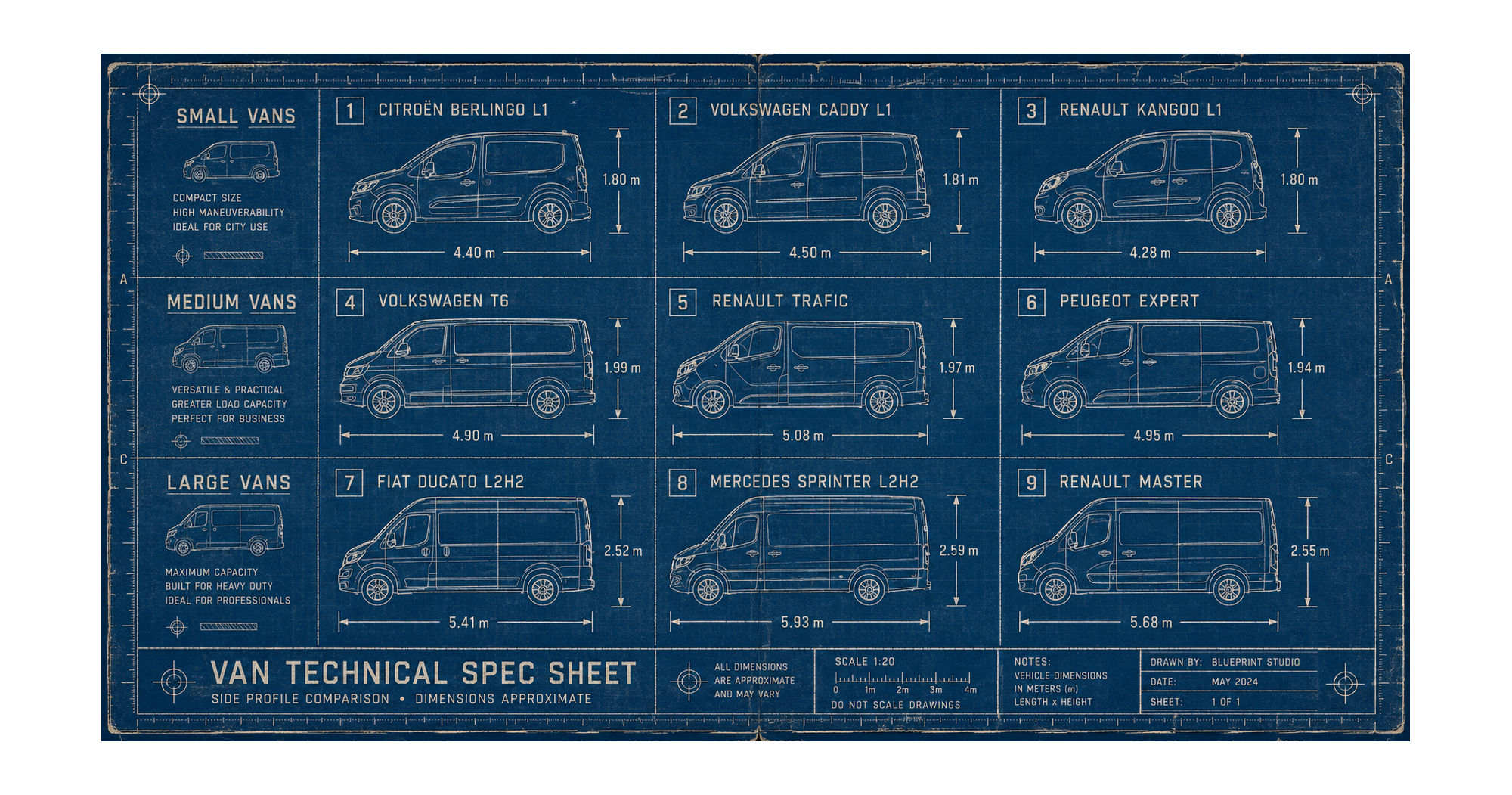
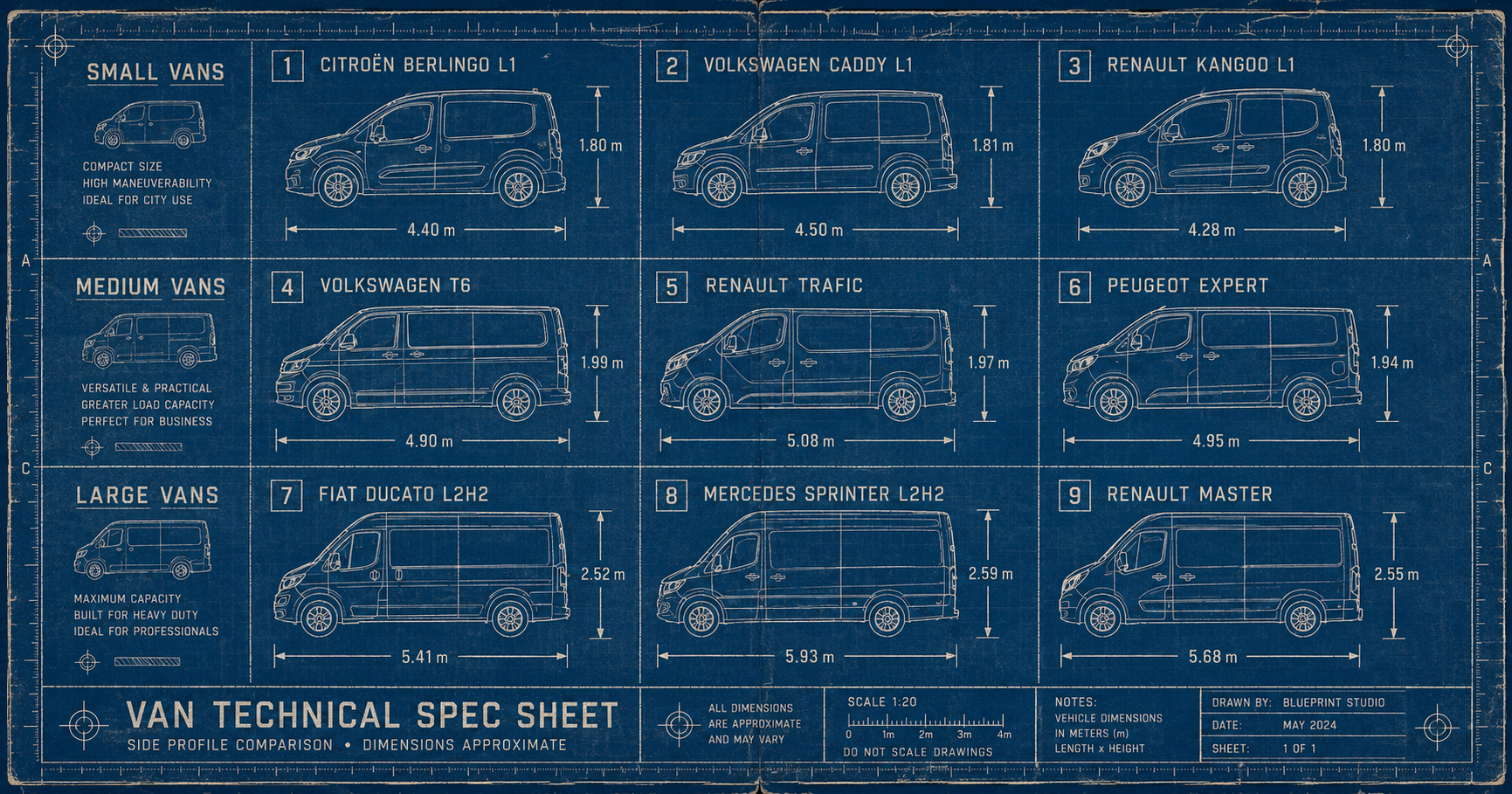
This guide covers nine vans across three size categories: small, medium, and large. That structure isn't arbitrary. It maps directly to how campervan furniture kits are designed. Small vans get compact weekend setups. Medium vans fit a full modular conversion with bed, kitchen, and storage. Large vans open up standing room, fixed beds, and a proper home on wheels.
Know your category first. Pick your van second.
Within each category, we've ranked three strong options, given each an overall star rating, named a standout model to search for, and flagged a budget pick and a premium pick at realistic European prices.
Before you fall in love with a listing, get the basics right.
Do:
• Decide your size category before browsing.
• Ask for full service history.
• Ask what the van was used for.
• Inspect rust carefully: sills, arches, rear floor, door frames, and roof seams.
• Test drive it from cold.
• Measure the load space before buying.
Don’t:
• Buy a crew van unless you genuinely need the seats.
• Assume newer means better.
• Ignore dashboard warning lights.
• Spend your whole budget on the van.
• Buy a van that smells of damp, oil, chemicals, plaster, or fish.
• Choose size based on fantasy rather than real use.
A well-maintained 2015 van with full history is often a better buy than a neglected 2020 van with none. Buy on condition first, mileage second, and age third.
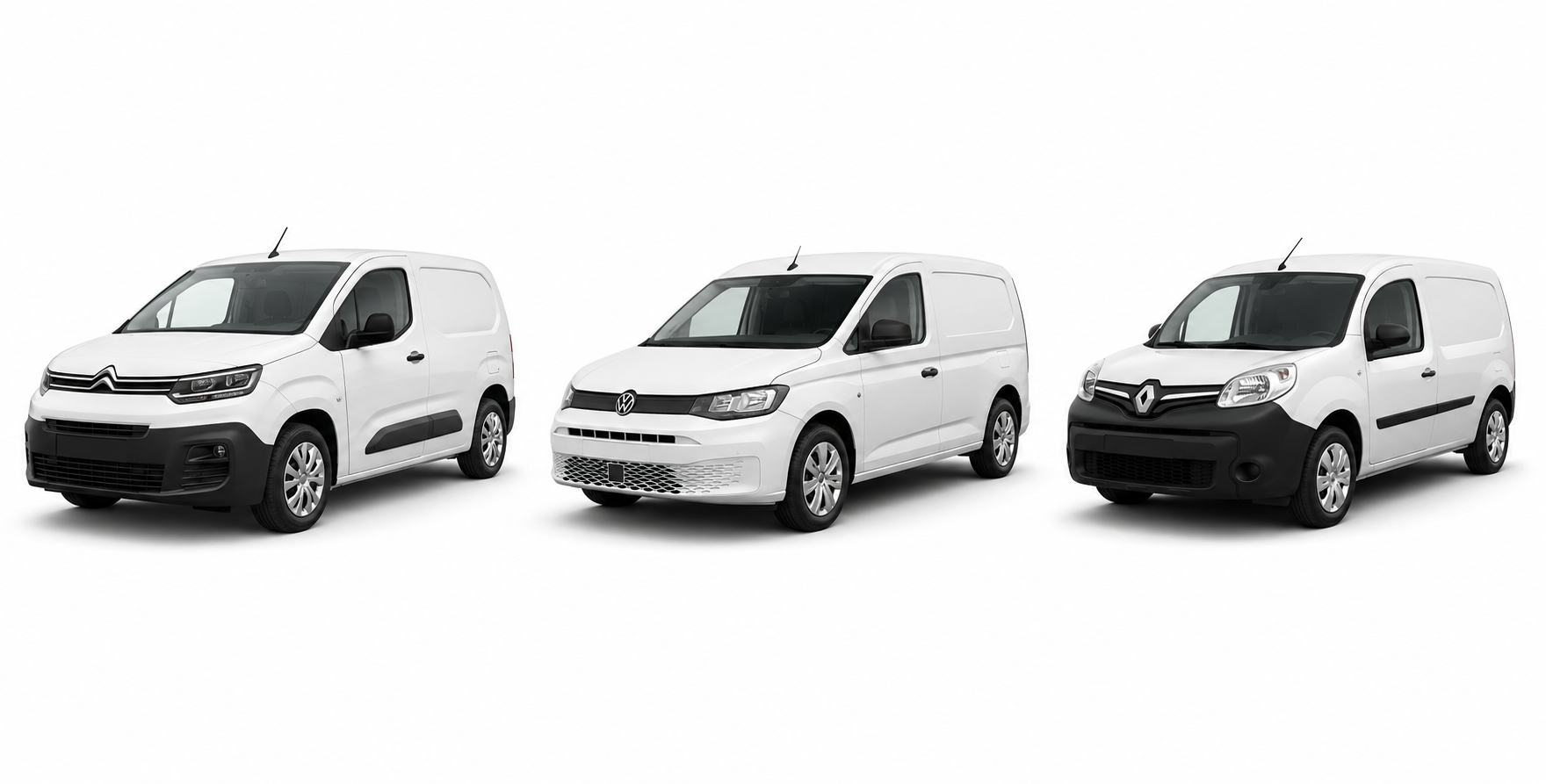
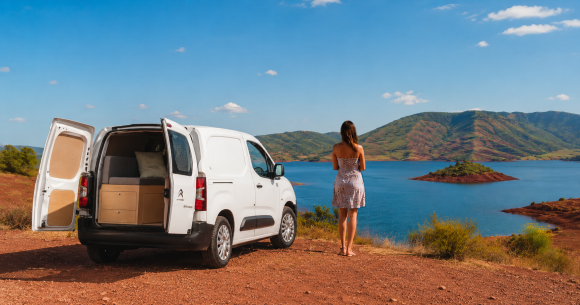
Small vans are cheap to buy, cheap to run, easy to park, and, with the right furniture, genuinely liveable for short trips. You won't have a bathroom or standing room, but for weekends and holidays they're hard to beat.
Budget pick (around €5,000–7,000): Citroën Berlingo M BlueHDi 100, Peugeot Partner M, or Renault Kangoo L1 from around 2014–2017. A decade-old diesel with reasonable mileage is the honest entry point. Parts are cheap, these vans are everywhere, and for a simple weekend camper setup you don’t need more van than this.
Premium pick (around €16,000–22,000): A newer Berlingo XL, Peugeot Partner Long, VW Caddy Maxi, or electric small van from around 2021–2023. These cost more, but they give you modern comfort, lower mileage, and a better daily driving experience.
🥇 1. Citroën Berlingo
Overall: ★★★★☆
Best for: Solo travellers, weekend trips, daily driving and compact camper setups
The Citroën Berlingo M is one of the most popular small van conversion bases in Europe, and for good reason. It is easy to find on the second-hand market, cheap to service, simple to drive and compact enough to use as a normal everyday vehicle.
The Peugeot Partner M is the same basic van with a different badge, so buy whichever gives you the best condition, mileage and service history.
The standard L1 version is small, but it still works very well for a smart weekend camper setup. With the right layout, you can fit a compact bed, useful storage and a simple cooking setup without stepping up to a larger van (we’re looking at you, Weekender Deluxe).
Standout model to search for: Citroën Berlingo M BlueHDi 100 or Peugeot Partner M BlueHDi 100, roughly 2019–2022. Reliable diesel, widely available, economical to run and ideal for a compact weekend conversion.
Tip: Don’t assume you need the XL. If your priority is easy parking, daily use and weekend trips, the standard Berlingo M or Partner M may be the better choice.
🥈 2. Volkswagen Caddy L1
Overall: ★★★★☆
Best for: Converters who want premium build quality in a compact daily-driver van
The Volkswagen Caddy L1 is one of the best small vans for anyone who wants a camper that still feels easy to drive every day. It’s compact, refined, well-built, and more car-like than most vans in this category, with the VW fit-and-finish that makes it feel a little more premium.
The shorter L1 cargo space means you need to be smart with the layout, but that’s exactly where a compact camper setup makes sense. Our Weekender kit is designed for vans like this, giving you a practical pull-out bed, useful storage, and a simple weekend camping setup without turning the van into a full-time camper.
Standout model to search for: VW Caddy Cargo 2.0 TDI, roughly 2016–2020. These later models are well-proven, efficient, and still modern enough to feel good as a daily vehicle.
Tip: Caddy prices hold their value better than most small vans, so clean examples are rarely the cheapest option. Focus on condition, service history, and mileage rather than chasing the lowest price.
🥉 3. Renault Kangoo L1
Overall: ★★★☆☆
Best for: Weekend escapes, daily driving, and first-time vanlife on a tight budget
The Renault Kangoo L1 is a true small van: compact, affordable, easy to park, and widely available across Europe. A compact sleeping setup, clever storage, a cool box, and a simple cooking arrangement can turn a Kangoo L1 into a brilliant low-cost escape vehicle. If you want to test vanlife without committing to a larger vehicle, this is the honest starting point.
Standout model to search for: Renault Kangoo L1 dCi 95, roughly 2016–2021. The diesel is economical, widely available, and well suited to weekend use.
Tip: Don’t confuse “small” with “too small.” A Kangoo L1 can work very well as a camper, but only if the layout is designed around the limits of the van rather than fighting against them.
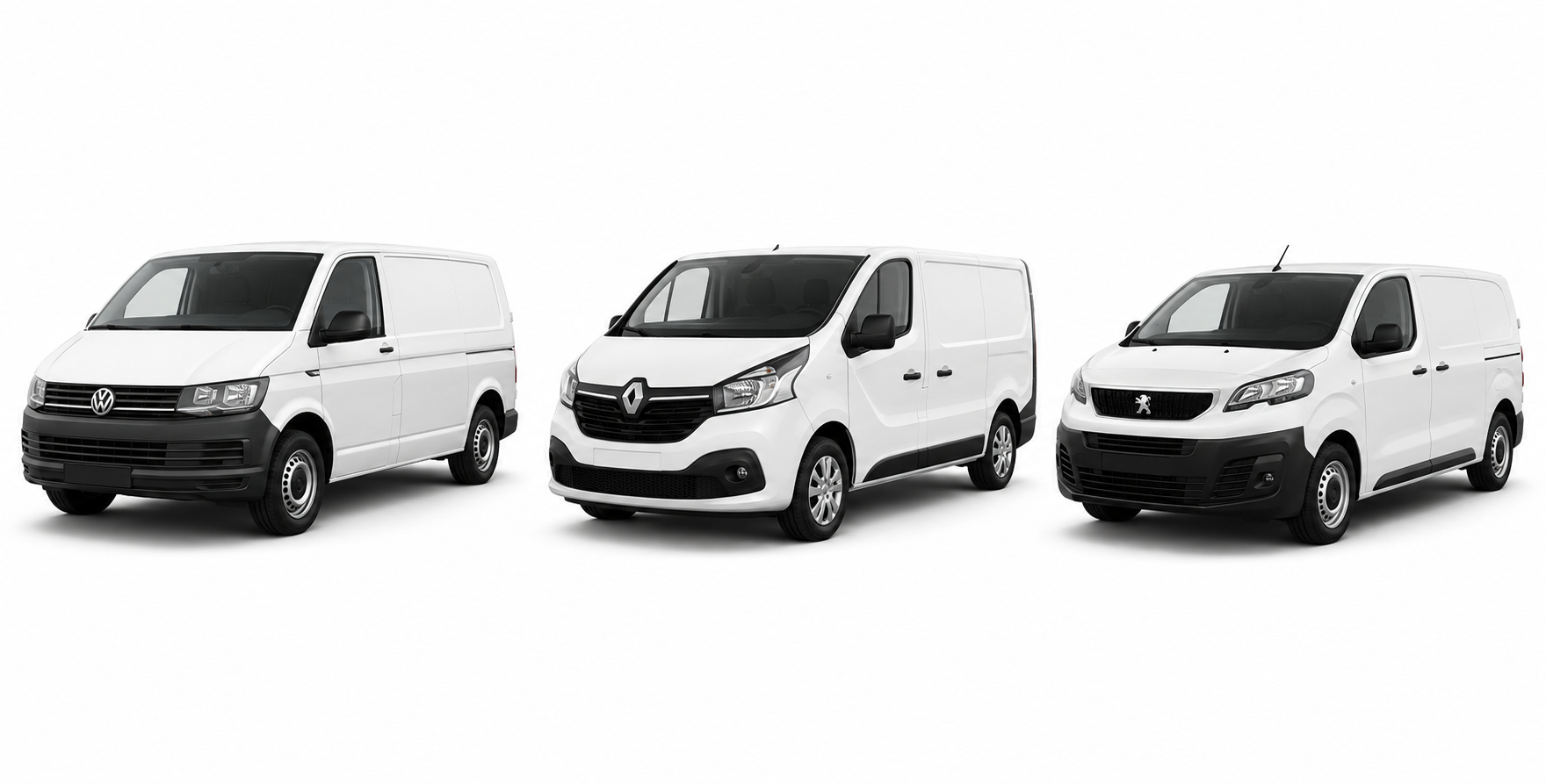
Medium vans are where most first-time converters end up. They're big enough to sleep and cook in properly, small enough to drive every day, and much easier to park than a large van.
The key choice in this category is L1 versus L2. L1 is easier as a daily driver. L2 gives you noticeably more living space.
Budget pick (around €8,000–12,000): Renault Trafic L1 dCi 120 or Opel Vivaro, roughly 2014–2017. A well-maintained example at this price can be a very strong first camper base.
Premium pick (around €22,000–30,000): VW Transporter T6.1 2.0 TDI, roughly 2020–2023. Expensive, but one of the safest premium choices in the medium van category.
🥇 1. Volkswagen Transporter T6
Overall: ★★★★★
Best for: Converters who want the benchmark premium medium van
The T6/T6.1 is the benchmark premium medium van. It drives well, holds value, has huge aftermarket support, and remains one of the safest choices if budget allows.
The conversion geometry is excellent: flat floor, consistent dimensions, and decades of builders who have solved almost every layout problem before you arrive at it. The T6.1 added a more modern interior, updated engines, and better refinement. The earlier T6 is still excellent and often better value.
One trade-off worth knowing: price. A good T6.1 costs significantly more than an equivalent Trafic or Transit Custom, and servicing can be more expensive too. The short-wheelbase version is also shorter inside than some buyers expect, so measure carefully before committing to a layout.
Standout model to search for: VW Transporter T6.1 Panel Van L1 2.0 TDI 150hp, roughly 2020–2023. One-owner examples with full service history are the safest buy.
Tip: Older T5s can still be great vans, but they now need much more due diligence. A slightly rougher T6 is often a better bet than an older T5 at the same price.
🥈 2. Renault Trafic
Overall: ★★★★☆
Best for: First-time converters who want a practical, affordable, well-supported base
The Trafic is one of the most common van conversion bases in France and across Europe. Wide availability, sensible running costs, consistent geometry, and a huge second-hand market make it the default choice for many first-time builders.
The flat floor and relatively straight walls mean there are fewer surprises when furniture arrives. The Opel Vivaro is closely related, so a well-priced Vivaro can be just as good a buy as a Trafic.
One trade-off worth knowing: roof height. You won't get standing room in a standard Trafic. Most first-time converters make peace with that. Some don't. If standing headroom is non-negotiable, jump to the large van category.
Standout model to search for: Renault Trafic L1 or L2 dCi 120, roughly 2017–2021. The 120hp diesel is a good balance of usability and economy.
Tip: The L2 is worth the search if you want a more comfortable camper layout. The extra length makes a real difference once you add a bed, kitchen, and storage.
🥉 3. Peugeot Expert
Overall: ★★★☆☆
Best for: Converters who want a compact medium van that is easy to drive and widely available
The Fiat Scudo, Citroën Jumpy, Opel Vivaro and Toyota ProAce are closely related vans, and they make a lot of sense for first-time converters who want more space than a small van without stepping up to the size of a Trafic or Transporter.
They are practical, efficient, easy to drive and widely available on the used market. For a compact camper setup with a bed, storage and a simple cooking arrangement, they can be a very sensible base.
The main drawback is width. These vans are noticeably narrower than some medium van alternatives, which means you need to think carefully about bed orientation, aisle space and furniture layout before buying. Our Drifter kit ships with a narrower (B120) bed for this reason.
Standout model to search for: Expert/Jumpy L2 BlueHDi 120, roughly 2017–2021. The L2 version is worth looking for if you want more flexibility inside.
Tip: Measure the internal width and length carefully before committing.
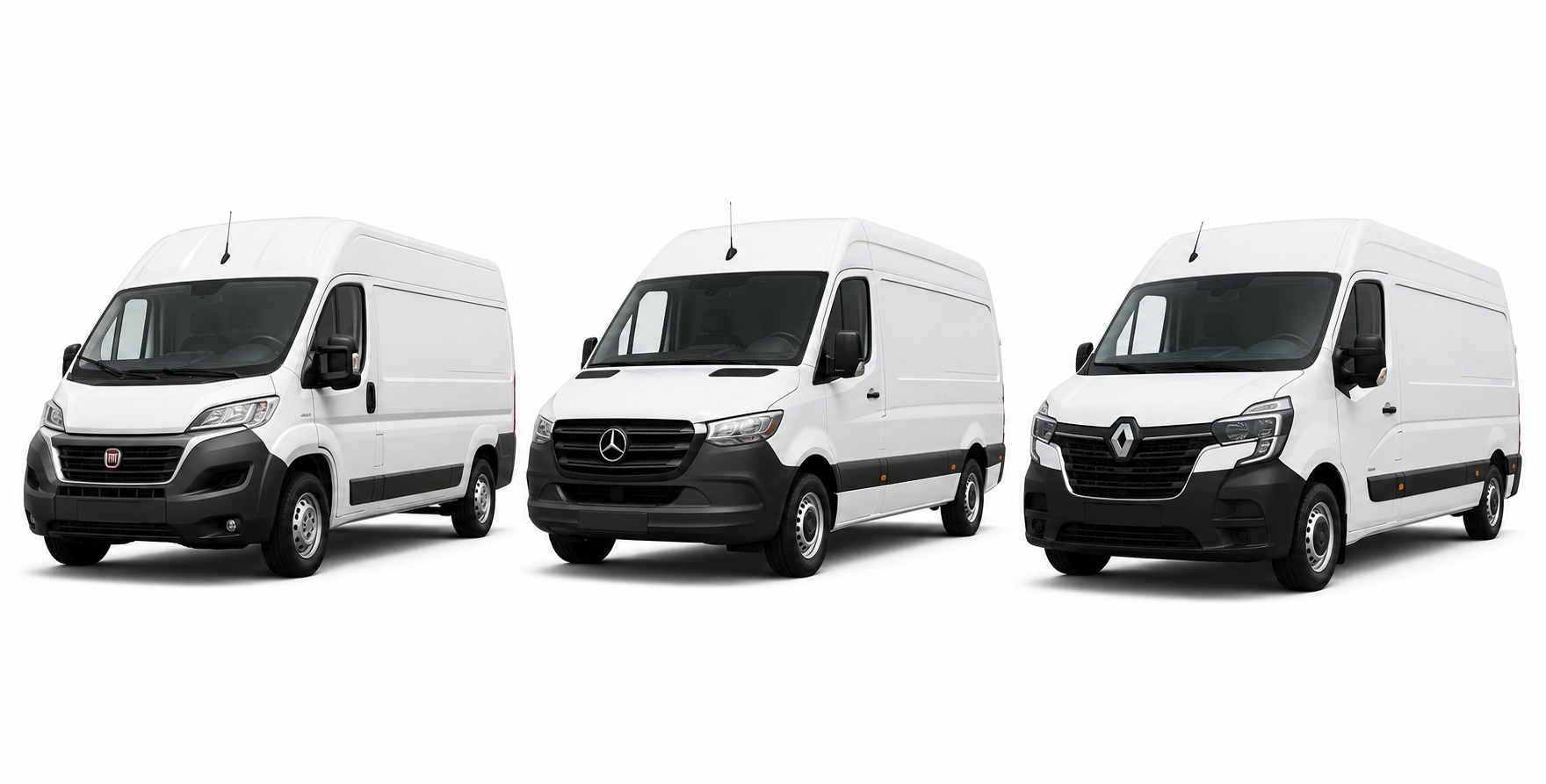
Large vans are a different game: standing headroom, fixed beds, real kitchens, and enough space to spend weeks inside comfortably. The trade-off is size. They're harder to park, more expensive to run, and more demanding to drive.
For many first-time converters, L2H2 is the safest starting point. It gives most people standing room, enough length for a real camper layout, and a van that still feels manageable on roads, campsites, ferries, and supermarket car parks.
L3 gives more interior space, but it also makes parking and everyday driving more awkward. H1 is cheaper, but once you lose standing room, you lose one of the main reasons to buy a large van in the first place.
Budget pick (around €7,000–12,000): Ducato/Boxer/Jumper L2H2 diesel, roughly 2012–2016. Mechanically proven, parts everywhere, and the extra age matters less if the history is solid.
Premium pick (around €23,000–32,000): Mercedes Sprinter 314 CDI L2H2, roughly 2020–2022. Expensive, but refined, durable, and excellent for serious long-term use.
🥇 1. Fiat Ducato
Overall: ★★★★☆
Best for: First-time large van converters who want space, value, and simplicity
The Ducato wins this category for first-time builders. It's one of the most affordable large vans in Europe, easy to service, widely available, and crucially, it's wide enough for many people to sleep across the van.
The Peugeot Boxer and Citroën Jumper are the same basic van with different badges, so buy whichever gives you the best condition, mileage, and service history.
One trade-off worth knowing: the driving experience is functional rather than refined. It's a working van, not a premium vehicle. Factor in parking, road width, and daily use before you buy.
Standout model to search for: Fiat Ducato 2.3 Multijet 130hp
Tip: L2H2 is usually the right first large van. L3 gives more interior space, but most first-time converters find the extra length more annoying than expected.
🥈 2. Mercedes Sprinter
Overall: ★★★★☆
Best for: Converters planning long-term or full-time van life
The Sprinter is the aspirational large van, and for serious, long-term use, the premium can be justified. Refinement, driving quality, and high-mileage durability are all part of the appeal. The high-roof version gives genuine standing room and changes how living inside the van feels.
One trade-off worth knowing: it's expensive to buy and expensive to service. It is also narrower inside than a Ducato, which means a transverse bed is less straightforward. The curved walls also require more careful furniture planning.
Standout model to search for: Mercedes Sprinter 314 CDI L2H2, roughly 2018–2022. The post-2018 generation is significantly more modern.
Tip: One previous owner with Mercedes service history is worth paying extra for. Also decide on your bed layout before buying. The Sprinter is narrower than a Ducato, so sleeping across the van is less straightforward.
🥉 3. Renault Master
Overall: ★★★☆☆
Best for: Converters who want a large van with good value and wide availability
The Renault Master is a strong, practical large van and a common sight across Europe. It doesn't have the same premium reputation as the Sprinter, or the camper-conversion width advantage of the Ducato, but it can be excellent value if you find a clean example.
The Nissan NV400 and older Opel Movano are closely related, so they should be compared with the Master rather than with the Ducato family. For buyers on a budget, this group can offer a lot of van for the money.
Standout model to search for: Master/NV400/Movano L2H2 dCi 130 or dCi 135, roughly 2016–2021.
Tip: Don't buy on badge. In this category, condition, service history, rust, and previous use matter far more than whether the van says Renault, Nissan, or Opel on the front.
The best first campervan is not always the biggest van you can afford. It’s the van that fits your real life, your budget, and the kind of trips you actually want to take.
If you’re unsure, keep reading. We’ve got lots more to say about choosing the right van.
Whatever size you choose, don't spend your whole budget on the base vehicle. A clean, well-maintained used van with the right modular furniture will give you a better camper than an expensive van with no money left to make it usable.
Buy the right van. Keep the build simple. Get on the road.

Compatible with all large vans like the Fiat Ducato, Peugeot Boxer, Citroën Jumper, Renault Master, Opel Novano, Nissan NV400, Mercedes Sprinter, Volkswagen Crafter, Iveco Daily...
Compatible with all large vans like the Fiat Ducato, Peugeot Boxer, Citroën Jumper, Renault Master, Opel Novano, Nissan NV400, Mercedes Sprinter, Volkswagen Crafter, Iveco Daily...
By THEME
SIMPLE VANS
USEFUL INFORMATION & LINKS
Compatible with all large vans like the Fiat Ducato, Peugeot Boxer, Citroën Jumper, Renault Master, Opel Novano, Nissan NV400, Mercedes Sprinter, Volkswagen Crafter, Iveco Daily...
Compatible with all large vans like the Fiat Ducato, Peugeot Boxer, Citroën Jumper, Renault Master, Opel Novano, Nissan NV400, Mercedes Sprinter, Volkswagen Crafter, Iveco Daily...
By THEME
SIMPLE VANS
USEFUL INFORMATION & LINKS
Please sign in first.
Sign in