Materials: What's Actually Worth Using
The material question sounds straightforward until you start researching it, at which point you'll encounter confident opinions in every direction. Most of them are right about their chosen material’s benefits and wrong about how they work out for a bed build.
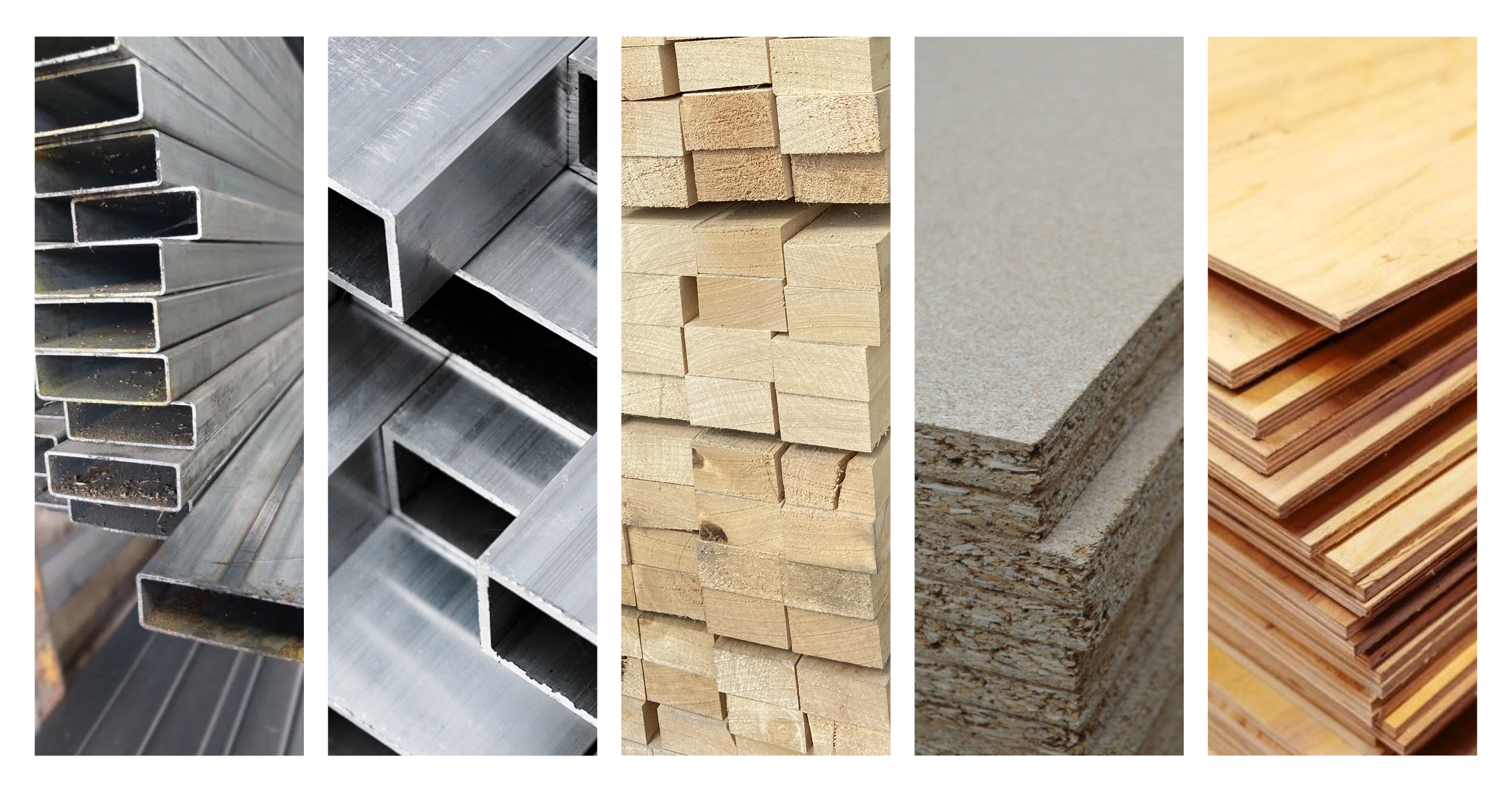
Steel is strong, required for crash-certified seating, and heavy. For a pure sleeping platform, it's usually overkill you're solving a structural problem you don't have, at a weight cost you'll feel every time you load the van.
Aluminium sounds most clever on paper. Light, corrosion-resistant, strong it's what aerospace uses, after all. The problem is that aluminium's strength comes from extrusions and formed sections, not flat sheet. Fabricating a bed platform properly requires either expensive pre-made profiles or welding skills, and once you've added enough flat sheet to feel rigid, the weight advantage over plywood has quietly disappeared.
Solid wood looks beautiful and feels honest in a way sheet materials don't. It's also heavy, prone to movement with humidity changes, and expensive in the widths a van bed demands. A few solid wood details in a build can be lovely. A solid wood bed platform is a project in romantic suffering.
MDF cuts cleanly, costs almost nothing… and has poor structural strength relative to its mass. It also hates moisture a significant flaw in a vehicle that generates condensation as a hobby. OSB is cheap, but that’s about it: it’s heavy, cracks under load, and its rough, flaked surface makes finishing awkward. Chipboard? Hates moisture, cracks easily, low resistance strength.
Realistically? It’s all about plywood. But which type?
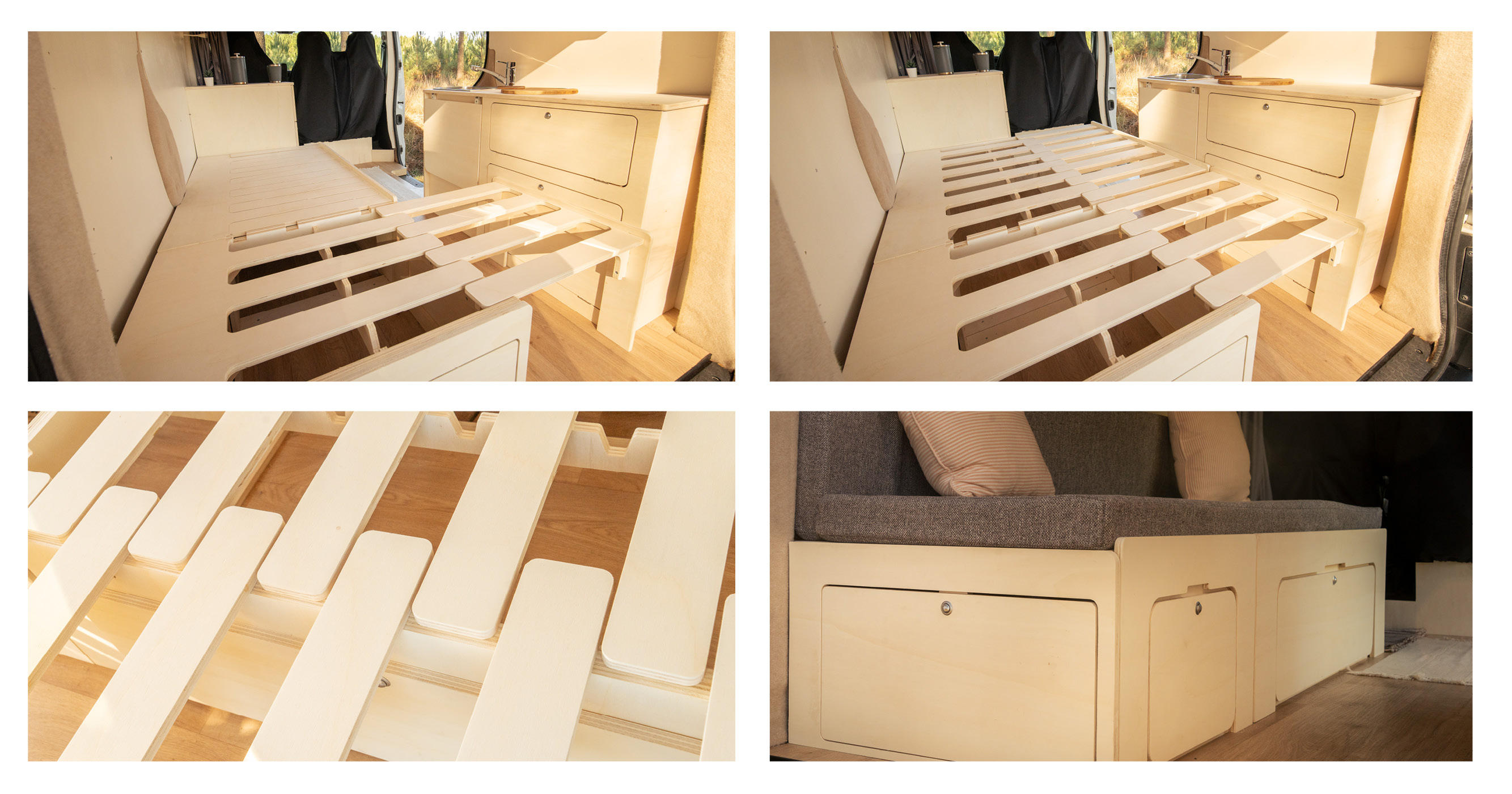
Well, among the plywoods, birch is the traditional choice: strong, reliable, used in cabinetry everywhere. It's also on the heavier end, and in a van build, that weight accumulates faster than you'd expect. Marine-grade plywood is more moisture resistant but carries similar weight penalties.
Lightweight poplar plywood is where things get interesting. Significantly lighter than birch, structurally solid when designed correctly, and genuinely well-suited to large components where weight compounds quickly. It’s not glamorous and it’s not always easy to find, which is probably why it doesn’t get talked about much. But in a medium van, shaving kilos off your largest structural element is one of the smartest decisions you can make.