
A van is basically a metal box. Park it in the sun for a few hours and it behaves like one –glass roof hatch or not. If you've just finished your build, or you're mid-conversion and starting to worry about how it'll actually feel to live in through July and August, that's a normal thing to worry about. Most first-time converters picture rain and cold when they think about "weatherproofing." Heat rarely crosses their mind until the first heatwave hits.
The good news: you don't need air conditioning to make a van liveable in a European summer. You need to stop heat getting in, help it escape once it's there, and make a few smart choices about what's inside the van in the first place. Here's what actually works.
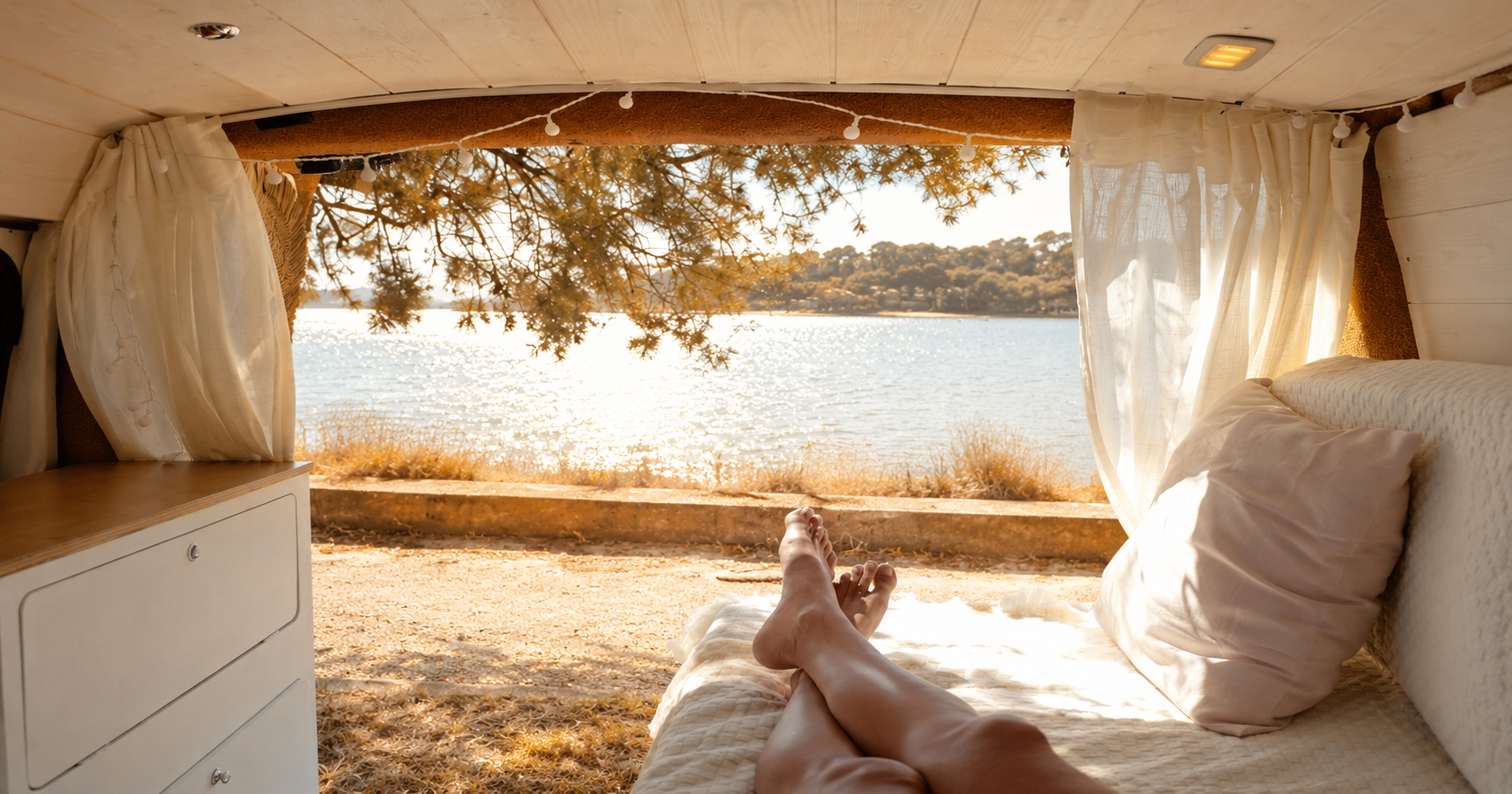
Most of the heat in a parked van comes through glass, not metal. The windscreen and side windows do more damage than people expect.
• Park in shade, and re-park as the sun moves. Obvious, but it's the single biggest lever you have. A van in full shade can be 10-15°C cooler inside than one in direct sun.
• Use reflective screens on every window, not just the windscreen. Cheap reflective silver screens (the kind sold for car windscreens) block a huge amount of radiant heat. Cut a set for side and rear windows too –most people only bother with the front. A cab divider curtain helps too: the windscreen is your biggest single heat source, and a simple curtain between the cab and the living area stops that heat migrating back to where you're sitting or sleeping.
• Light-coloured exteriors run cooler. If you're still deciding on paint or wrap colour, know that dark colours can add several degrees to the interior on a hot day. Not always practical to change, but worth knowing before you commit to a finish.
Trapped hot air is worse than hot air moving through. Ventilation is the difference between "warm but liveable" and "unbearable."
• A roof vent (with a fan) is the single best upgrade. Something like a Fiamma or MaxxFan pulls hot air out from the highest point in the van, where it collects. Running it on extract for 20 minutes before bed drops the internal temperature noticeably.
• Cross-ventilate, don't just vent one point. Cracking a window low on one side and running the roof fan high on the other creates airflow through the whole van, not just a hot pocket near the vent.
• Time it. Ventilate hard in the early morning and late evening when outside air is actually cooler than inside the van. Midday ventilation with hot exterior air won't help much. A cheap min/max thermometer takes the guesswork out of this –it tells you exactly when outside has dropped below inside, instead of you opening the door and guessing.
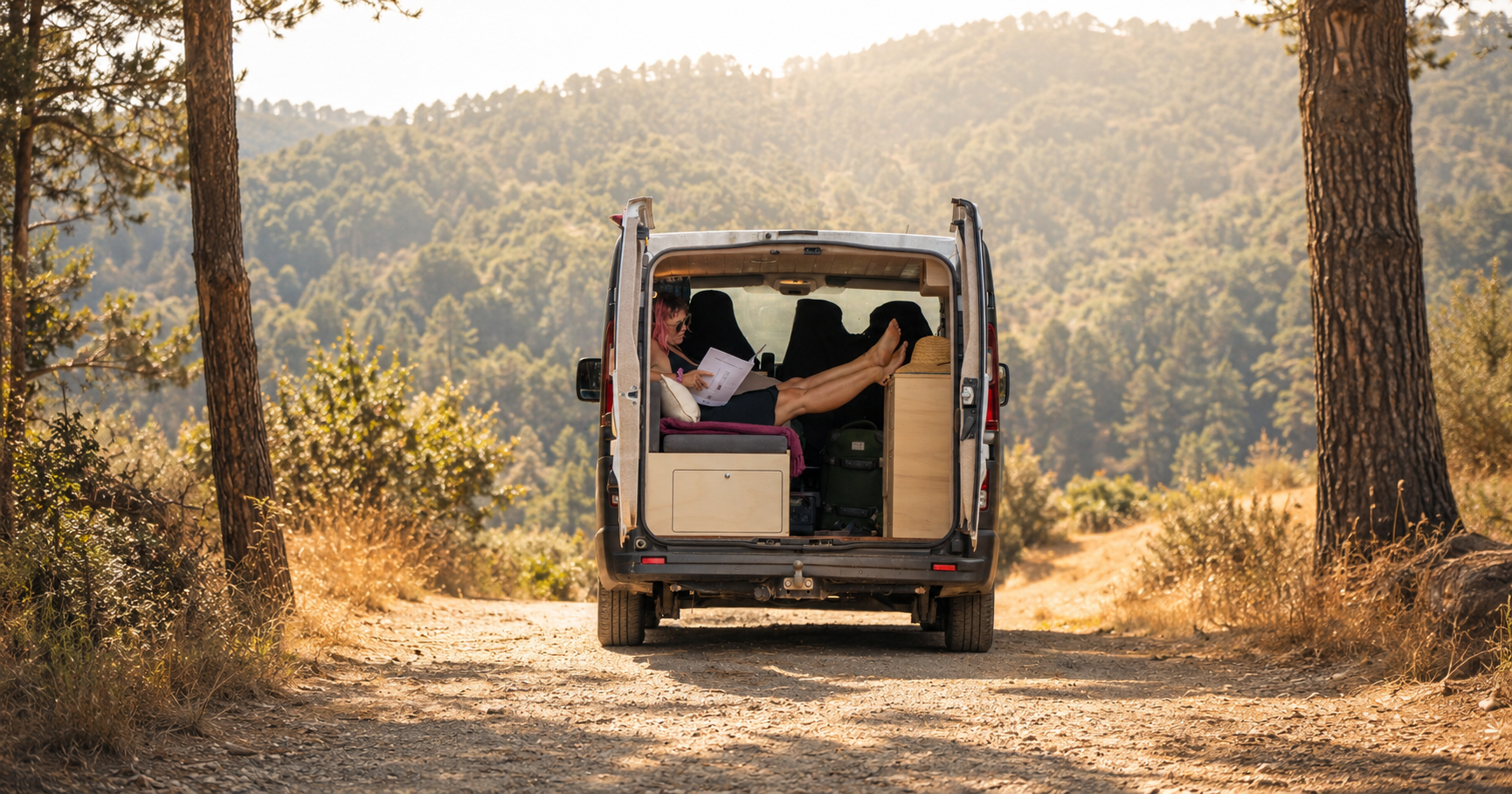
This is the part most heatwave advice skips, because most of it is written for tents and cars, not converted vans with built-in furniture.
A heavier interior adds mass to the whole van, and mass works against you the moment you start actively managing heat. Once you've found shade and got air moving, a lighter build cools back down in step with your effort –a heavier one lags behind it, so the first stretch of "we're in the shade now, why is it still roasting in here" is worse the denser your furniture is.
There's also a comfort factor people rarely think about: hot interiors can make synthetic finishes, plastics, adhesives, and low-grade composite boards smell stronger. Anyone who's opened a cheap flat-pack wardrobe in a hot room knows the smell. In a small van during a heatwave, material choice matters.
This is one of the reasons Simple Vans kits are cut from solid poplar plywood rather than the resin-heavy laminated board most DIY-store kits use –lighter to build with, and nothing in the panel itself that gets stronger-smelling as the van heats up. If you're still deciding what to build your interior from, it's worth asking any supplier what their board actually is, not just how it looks finished.
Fabric choices matter too –breathable, natural-fibre bedding and cushion covers over synthetic ones make a real difference to how the van feels at 2am in July, even after the air itself has cooled down.
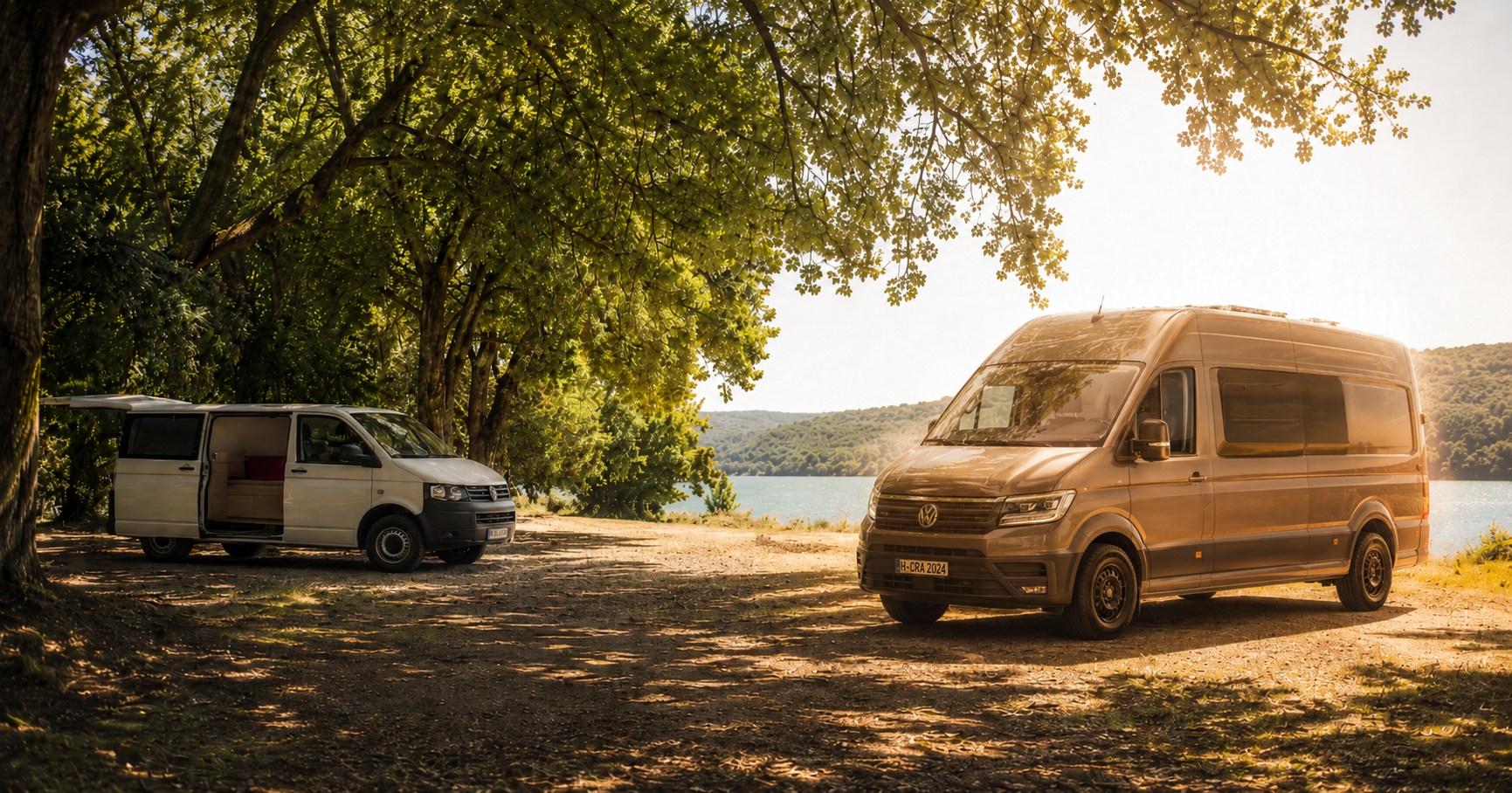
Cook outside if you can, or at least with the door open and the fan running –a gas hob adds heat and moisture to a small space faster than people expect. The same goes for stops, not just overnight parking: keep the windscreen covered even for twenty minutes in a supermarket car park, because that's plenty of time to heat-soak a cab you'll be driving in an hour later. If you're covering distance, aim for early morning or evening legs and treat the middle of the day as a shaded-stop window rather than a driving window. And resist the urge to seal the van up "to keep the cool in" during the day if you're not running a fan –a shut, unventilated van sitting in the sun heats up faster than one with air moving through it, not slower.
Where you park matters as much as how you park. The coolest spot is usually a mix of shade and breeze, not just shade –a shaded courtyard, dense forest, or low dip in the land often just sits there trapping warm, still air. Look instead for open edges: the edge of a field, somewhere near water, a shaded ridge, a headland. A wind map is worth a glance before you settle in, but low-tech clues work just as well –flags, grass, smoke, dust, or which way the trees are leaning tells you where the air is actually moving.
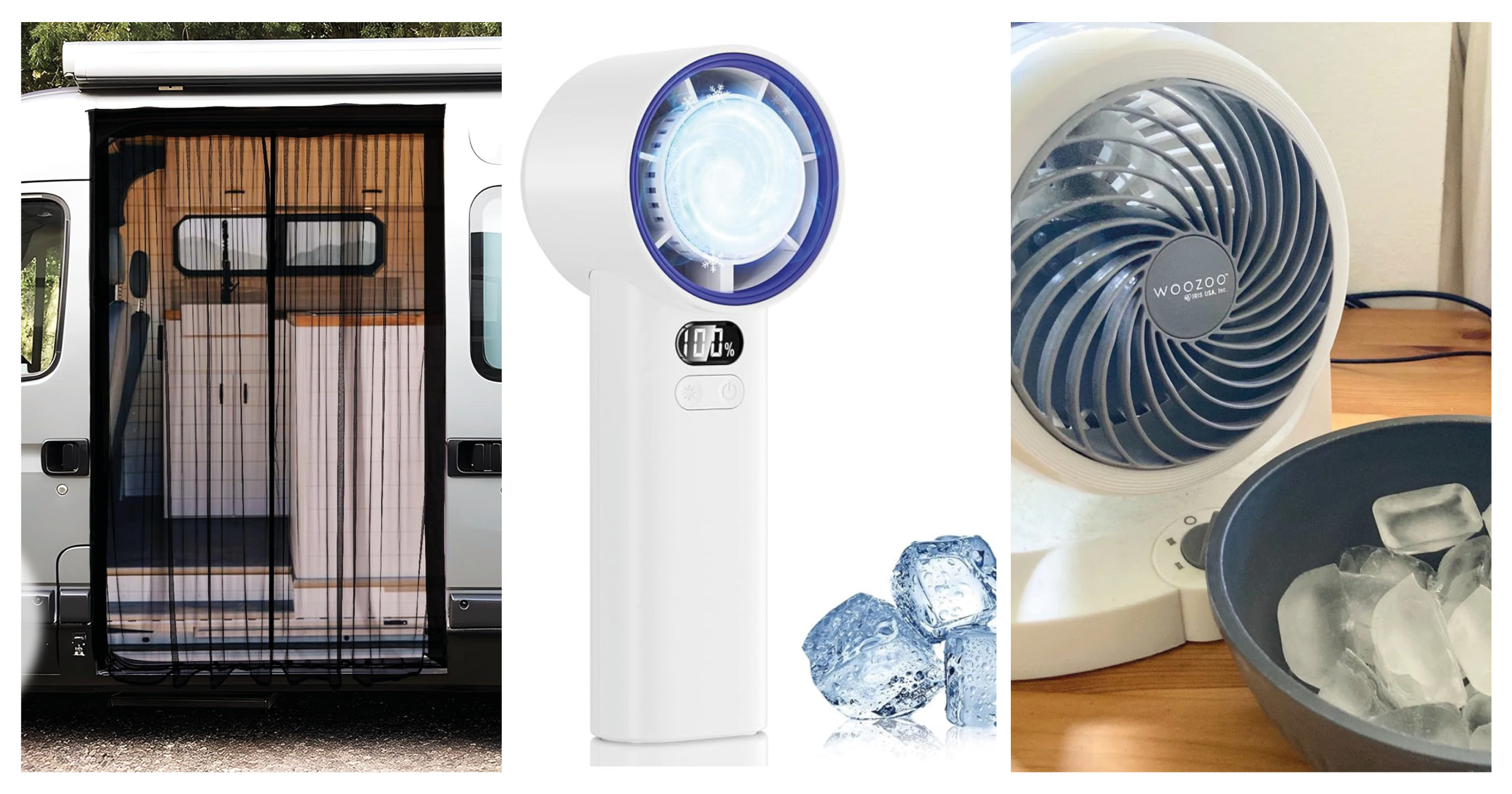
You don't need a complicated electrical system to make a van more comfortable in hot weather. A few small, cheap accessories do most of the work.
• A side door flyscreen. One of the most underrated summer upgrades. Being able to leave the side door open in the evening without inviting every mosquito on the campsite in changes everything –it lets the van cool naturally after sunset and makes cross-ventilation actually usable instead of theoretical.
• A USB-powered personal fan. A small rechargeable or USB fan won't cool the whole van, and it doesn't need to. Point it at your face or upper body while you're reading, cooking, or trying to sleep, and it makes hot air feel far more bearable. Look for one that clips onto a shelf or headrest so it moves with you.
• The frozen bottle trick. The classic "fan over ice" hack does work –just manage your expectations. A frozen water bottle or ice pack in front of a small fan gives a short blast of cooler air. It's not air conditioning and it won't cool the van for hours, but on a sticky night it takes the edge off. Frozen bottles beat loose ice here –they don't leave a puddle or add extra moisture to the air.
If you already read our guide to insulating your campervan, the same principle applies in reverse during summer: good insulation slows heat transfer both ways. It keeps warmth in during winter and keeps radiant heat out during summer, provided you pair it with the ventilation habits above. Insulation without airflow just creates a very well-insulated oven –you need both.

Compatible with all large vans like the Fiat Ducato, Peugeot Boxer, Citroën Jumper, Renault Master, Opel Novano, Nissan NV400, Mercedes Sprinter, Volkswagen Crafter, Iveco Daily...
Compatible with all large vans like the Fiat Ducato, Peugeot Boxer, Citroën Jumper, Renault Master, Opel Novano, Nissan NV400, Mercedes Sprinter, Volkswagen Crafter, Iveco Daily...
By THEME
SIMPLE VANS
USEFUL INFORMATION & LINKS
Compatible with all large vans like the Fiat Ducato, Peugeot Boxer, Citroën Jumper, Renault Master, Opel Novano, Nissan NV400, Mercedes Sprinter, Volkswagen Crafter, Iveco Daily...
Compatible with all large vans like the Fiat Ducato, Peugeot Boxer, Citroën Jumper, Renault Master, Opel Novano, Nissan NV400, Mercedes Sprinter, Volkswagen Crafter, Iveco Daily...
By THEME
SIMPLE VANS
USEFUL INFORMATION & LINKS
Please sign in first.
Sign in