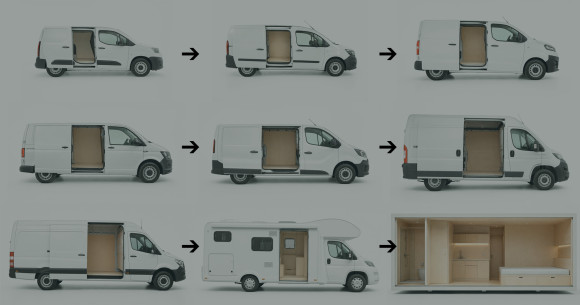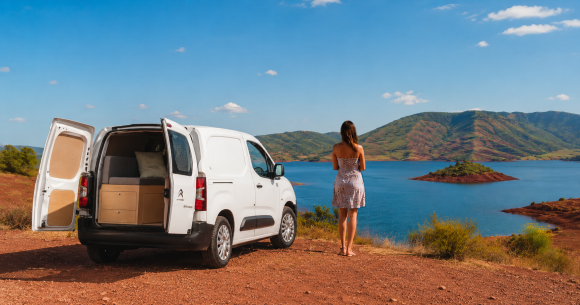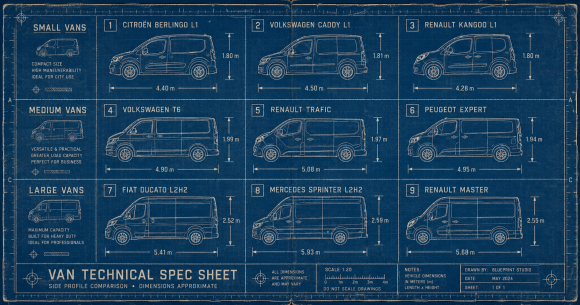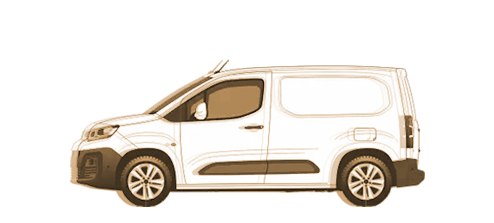
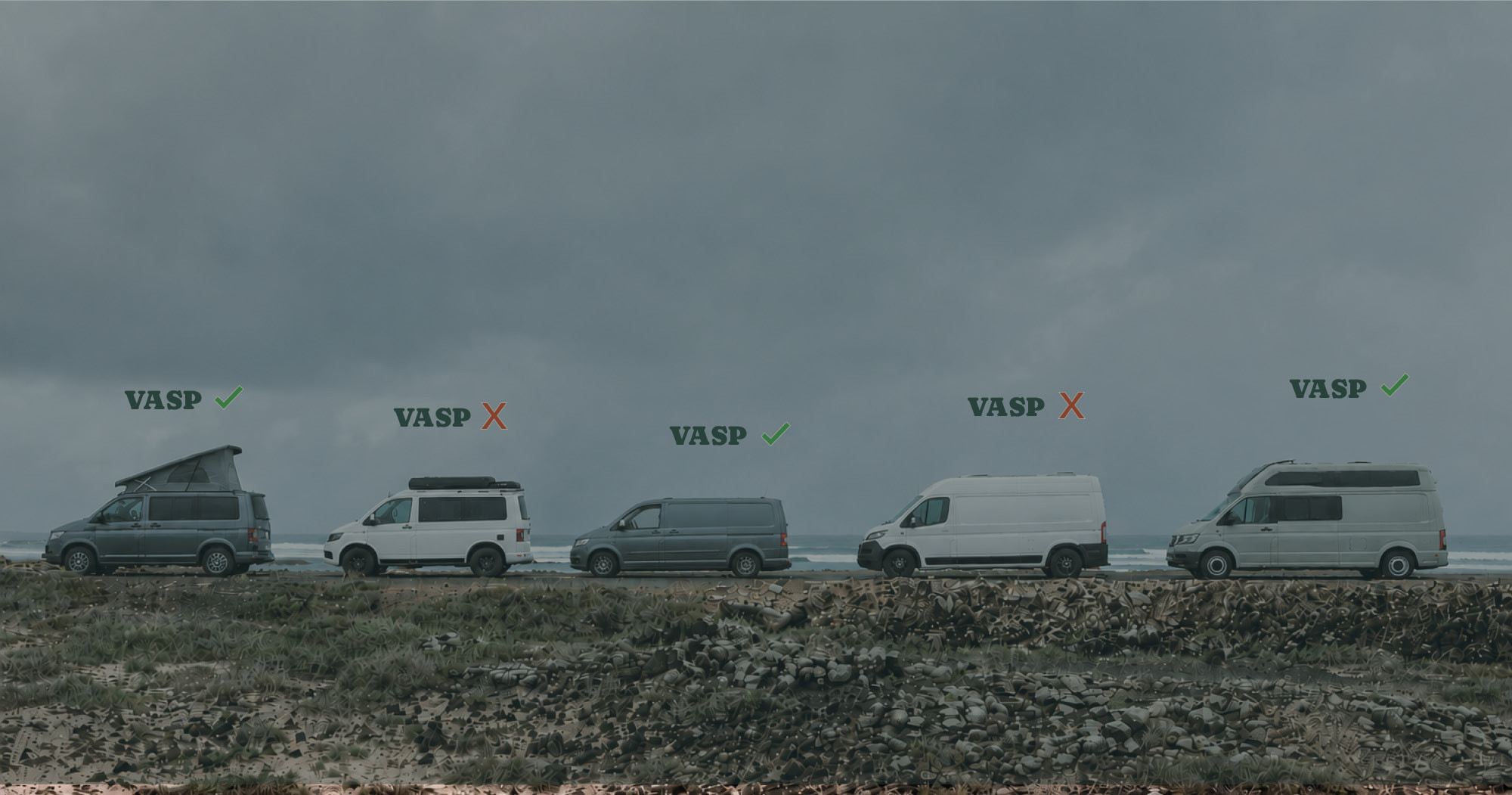
Pull into any campsite, ferry queue or mountain car park in Europe and you'll see the same thing: a row of vans with the back doors open and someone making coffee.
Look closer and they're wildly different vehicles. Factory-built motorhomes. Professional conversions. Beautiful home-builds with reclaimed oak worktops. And a fair few panel vans with a mattress, a cool box and a very happy dog.
What you can't see is their paperwork – and that's where they differ most. Some are officially registered as motorhomes. Some are registered as ordinary utility vehicles, entirely correctly, because that's genuinely what they still are. And some sit in a middle ground their owner has never thought about, in vehicles that have quietly become campers without the paperwork catching up. Almost nobody in that last group set out to do anything wrong. They simply never knew there was a line to cross.
From the outside, you may not be able to tell these vans apart. Two almost identical vehicles can have completely different legal statuses. If you're new to this, there's no obvious way to work out which one you're building. The rules also shift as you cross borders.
Europe agrees on the basic idea of what a camper is, then every country runs its own process, with its own name and its own paperwork. We're a French company and most of our customers are in France, so this guide focuses on VASP – the French registration category for a converted camper.
It's the introduction: what it is, what it costs, and how to decide. And before we go further, the reassuring part. You do not need VASP to sleep in your van. Thousands of people across Europe are cooking dinner on a tailgate and sleeping in the back tonight, in vehicles still registered as ordinary vans, entirely legally.
If you've been worrying that you're doing something wrong, this guide should help. But there is a line. Let's find it.
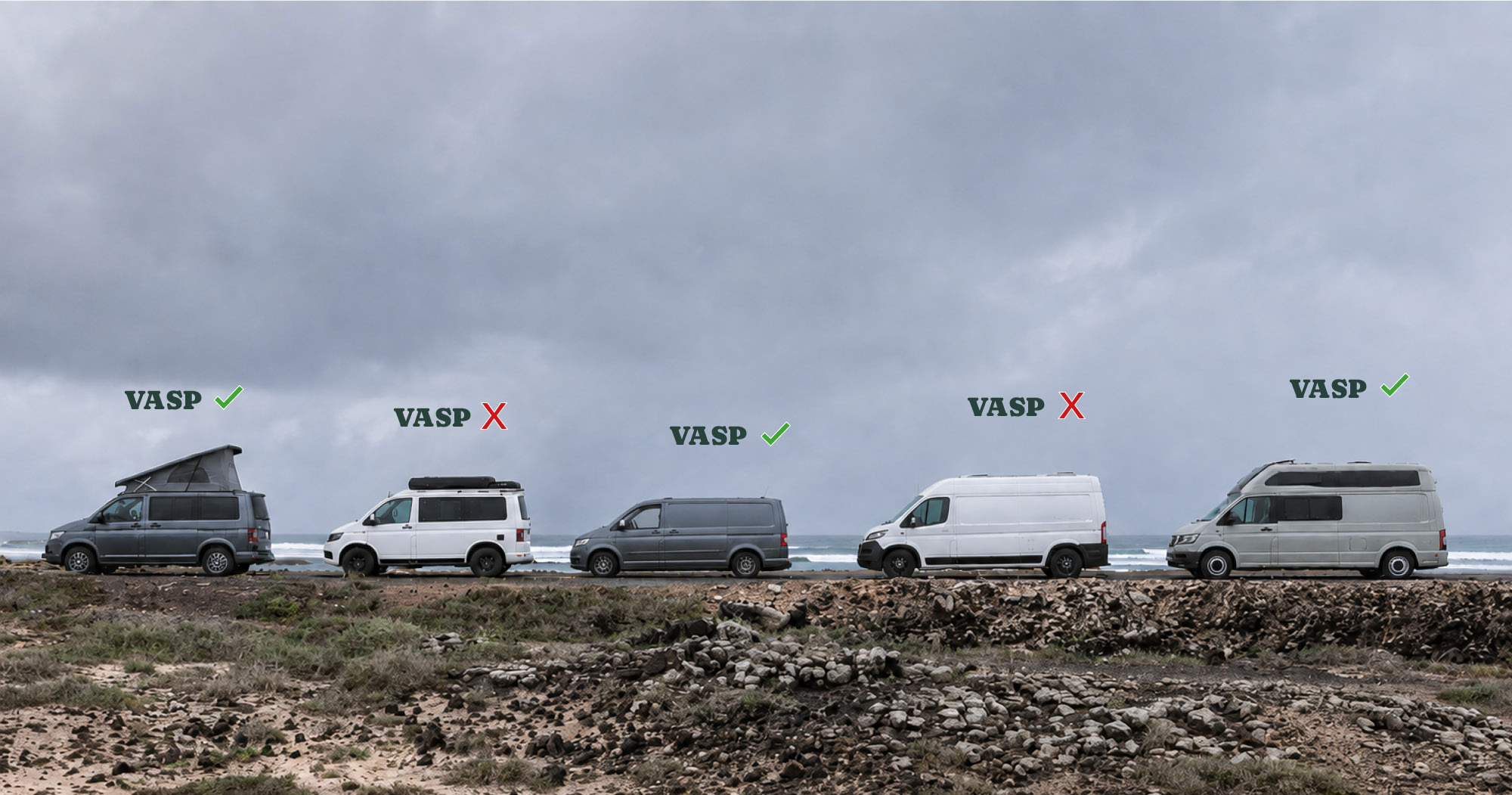
So the useful question isn't "do I have camper furniture in my van?" It's "has my van actually become a camper?"
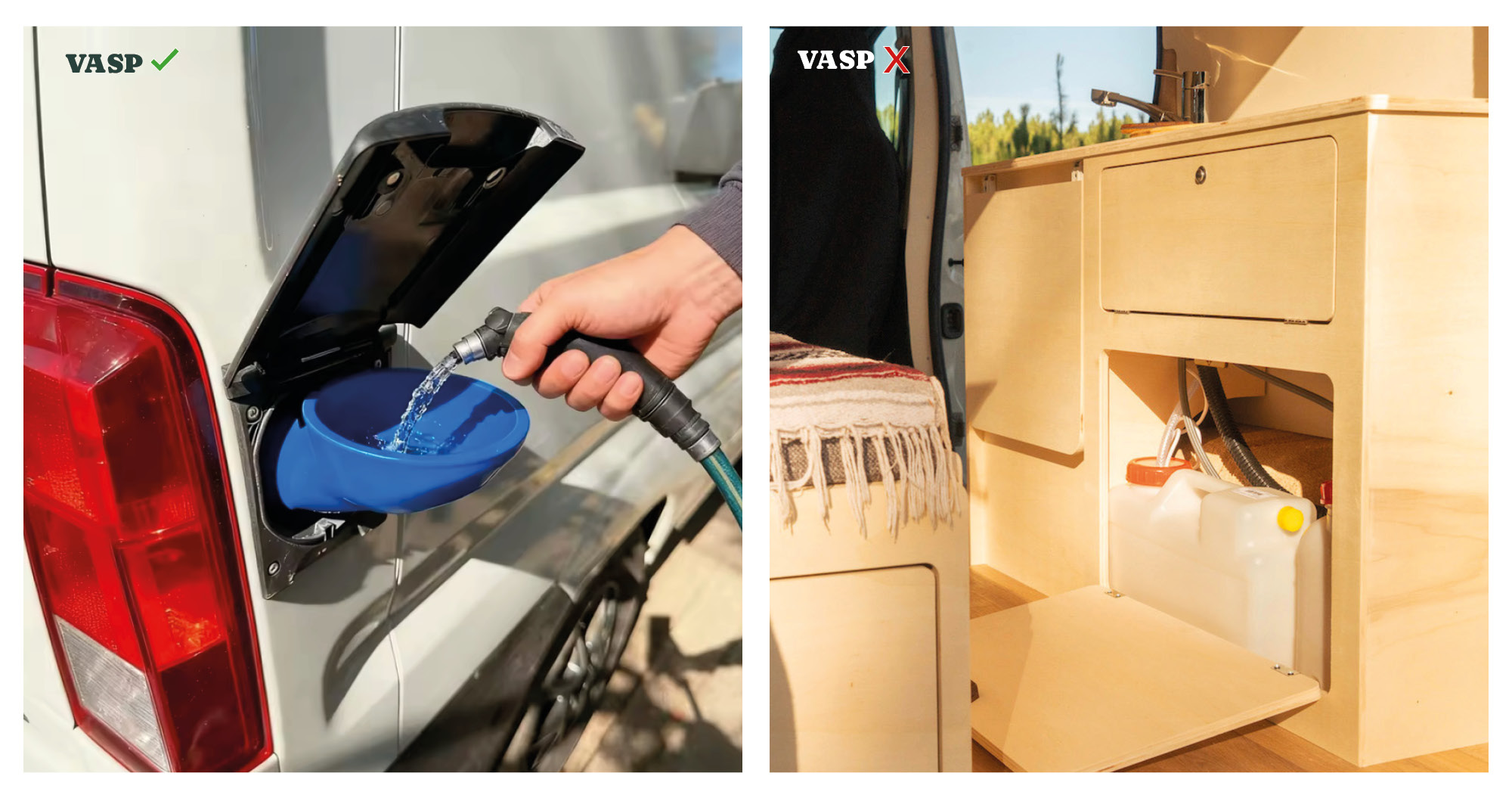
If you've read this far and decided the paperwork isn't for you, you have a genuine option, and it's a much better one than people assume. This isn't a loophole. A van that honestly isn't a motorhome doesn't need to be registered as one. The trick is knowing which decisions actually move you across the line, so you can spend your effort everywhere else.
And here's the good news: the things that keep you on the simple side of the line are mostly to do with the kitchen. Almost everything else that makes a van comfortable, you can have.
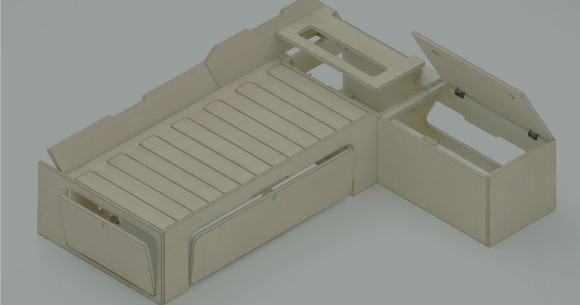
You can have a proper fixed bed. Bolt it down. You want it bolted down, because loose furniture in a moving vehicle is genuinely dangerous, and a permanent bed on its own doesn't make you a motorhome. The same logic applies to real fixed storage, so fit your cupboards, drawers and lockers and secure them properly. Seating and a table are fine too. So are insulation, cladding and a beautifully finished interior, because warm, quiet and lovely is not a regulatory category.
That is most of a camper, and all of it is available to you. You can also, as it turns out, cut in side windows and a rooflight – but that deserves a section of its own, and it's coming up shortly.
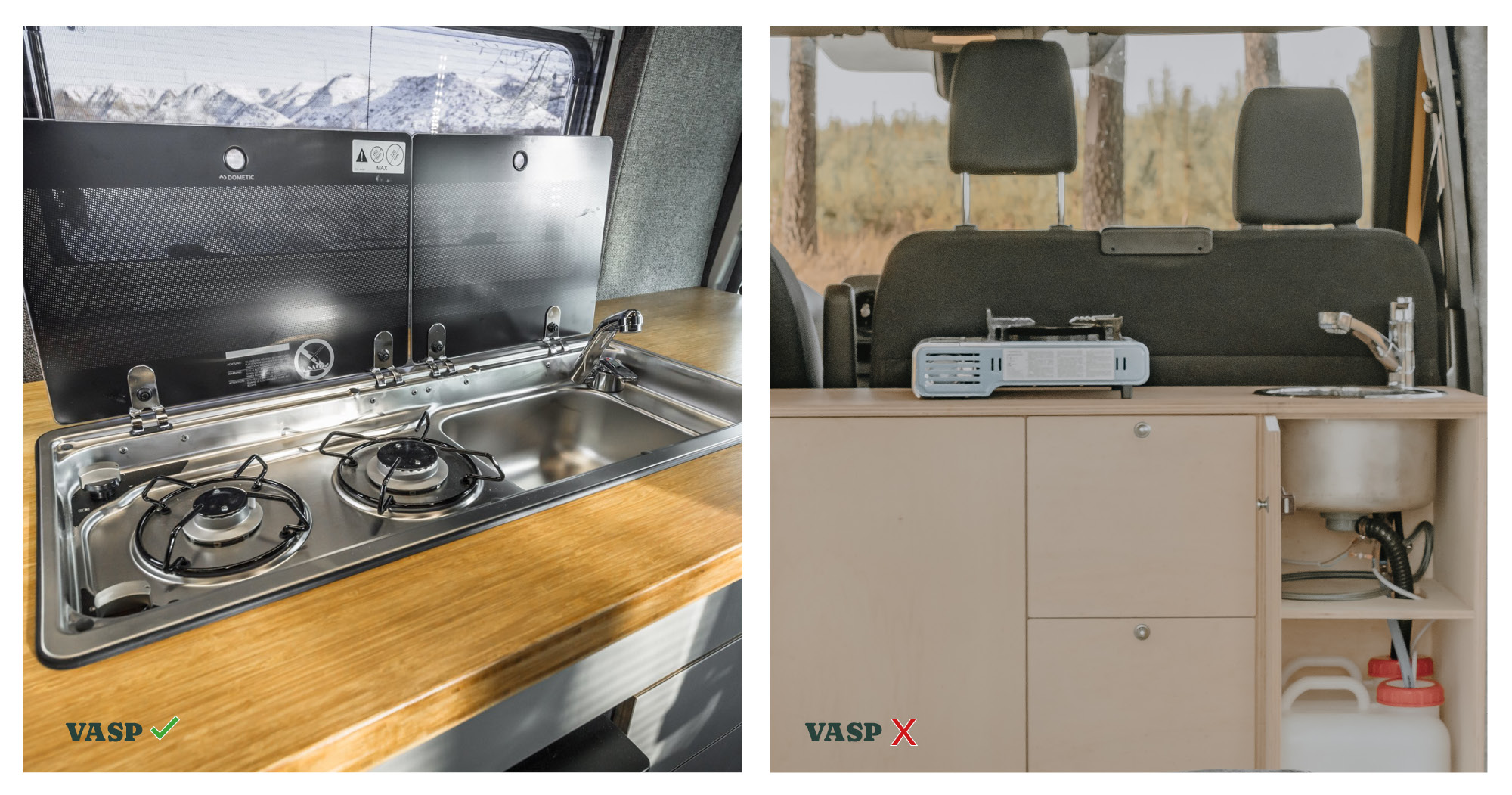
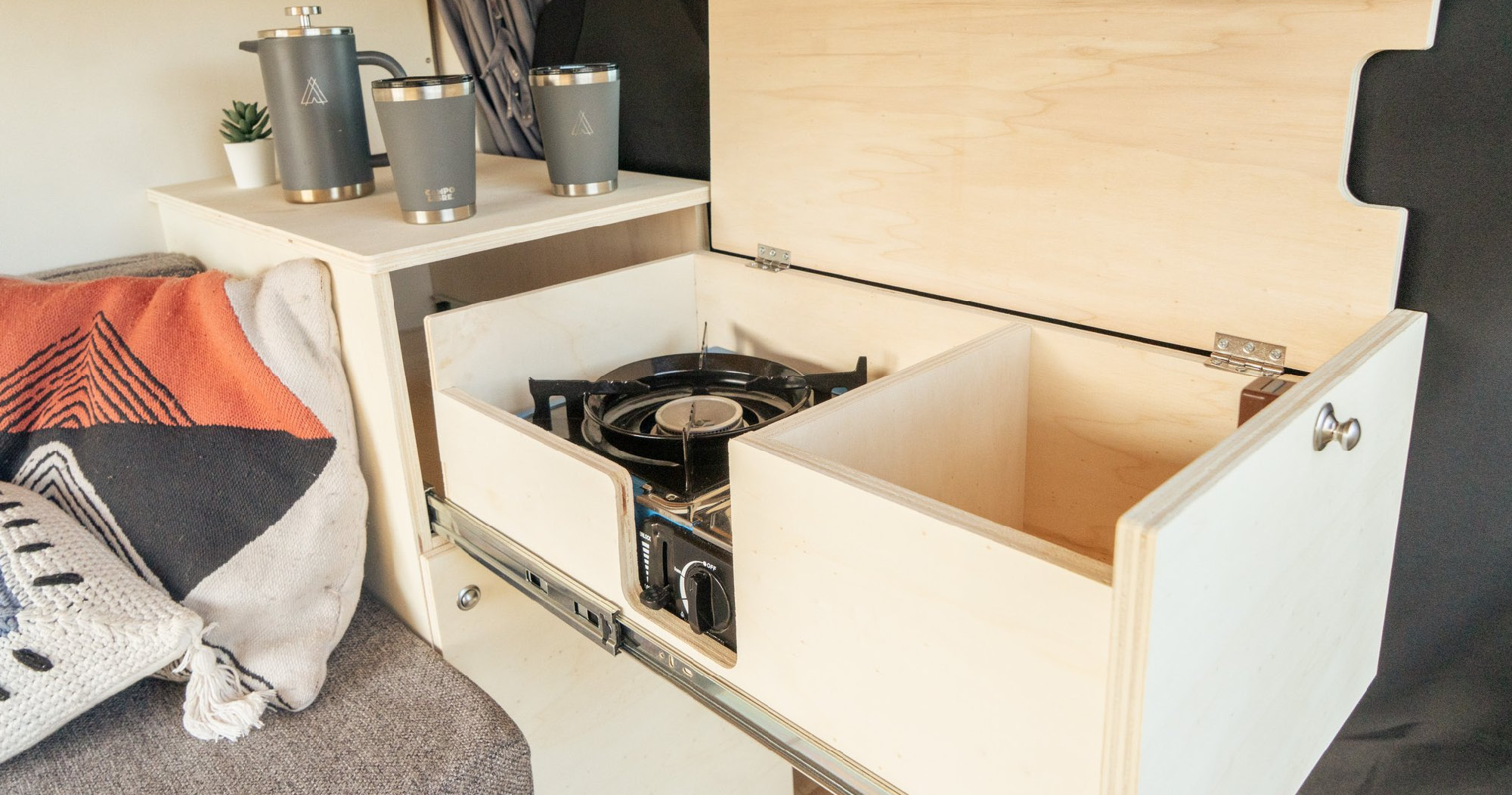
Cooking is the big one, and the answer is to keep it portable. Use a quality portable stove, whether a gas cartridge model or an induction hob running off a power station, rather than a hob plumbed permanently into the van. Give it a dedicated slot so it travels safely and comes out in seconds. Honestly, plenty of people who could fit a fixed hob choose not to. You can cook outside in good weather, which is nicer anyway, and you're not carrying a permanent gas installation around with you.
Water follows the same principle: keep it removable. A portable container and a simple pump will serve you better than a plumbed tank with a fixed sink and drain. Our water kits use 12, 13 and 19 litre containers in exactly this way, so you get running water at a sink and simply lift the container out to refill it. Day to day it's barely different, and it's far easier to keep clean.
Power is worth thinking about too. A large portable battery station, rather than a fixed leisure-battery installation with permanent wiring, will run your fridge, lights and laptop perfectly well. You can carry it indoors to charge, and you've avoided a permanent electrical install. Several of our customers run an EcoFlow-type unit inside a kitchen cabinet.
As for a toilet, a cassette or composting unit you can lift out beats anything plumbed into a black tank, for this purpose and arguably for every other purpose too.
The fees themselves are modest. Budget around €400 to €500 for a straightforward DIY application. To give you a sense of the shape of it, one recent application came to roughly €470 in total: about €360 for the approved habitation and gas inspection, €86.90 for the DREAL inspection, around €8 for the transformation plate, and about €14 to update the carte grise. Treat those as an illustration rather than a price list, because certification costs vary.
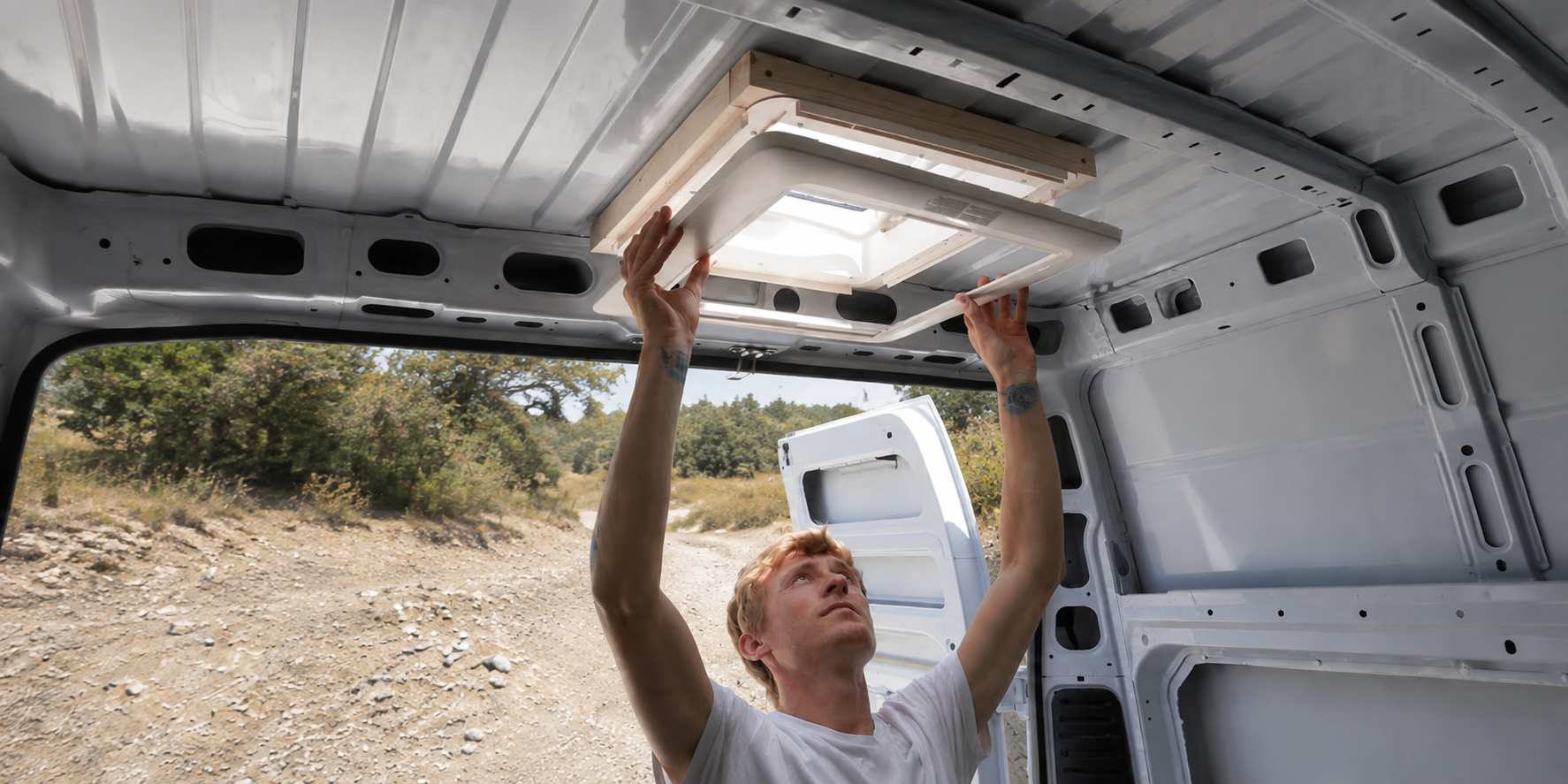
Yes. And this is one of the most useful things in this entire guide, because many people assume the opposite. French DREAL guidance states that fitting a side window or a rooflight is permitted, subject to two conditions.
First, the element you fit must be homologated to UN-ECE Regulation 43, the international standard covering safety glazing. Second, you must not cut structural parts of the vehicle.
Cutting non-structural body panels requires no manufacturer approval at all. Cutting structural members is a different matter entirely: that needs the manufacturer's prior agreement, and then a fresh DREAL reception on top of it.
So a compliant window or rooflight, fitted entirely within a non-structural panel, doesn't require DREAL reception. And it certainly doesn't make your van a motorhome. VASP classification depends on the complete conversion, not on whether you've cut holes in the bodywork.
That opens up considerably more than people realise. You can have a CTTE van, insulated and lined, with approved side windows, an approved rooflight, passive ventilation, a fixed bed, proper cabinets and storage, a removable table and a portable stove. Light, air, warmth, somewhere to sleep and somewhere to put your things. A genuinely lovely vehicle to spend a fortnight in – and still not a motor caravan, because there is no fixed cooking facility.
One related job does need approval, and catches people out: adding a rear bench seat to a camionnette counts as a cabine approfondie conversion and requires DREAL reception. Seats are treated far more seriously than windows, for fairly obvious reasons.
A fixed heater is allowed too, but with more conditions attached.
It must comply with UN-ECE Regulation 122, carry the appropriate marking, and you'll need to supply the homologation certificate. That regulation permits only two kinds of additional heater beyond the engine's own heat-recovery system: combustion heaters running on liquid or gaseous fuel, and electric heaters.
Which rules out wood burners and pellet stoves entirely, however handsome they look on Instagram. If you've been planning one, plan something else.
For milder trips you may not need any of it. Good insulation, thermal blinds and a 12 V electric blanket go a remarkably long way.
You can build something warm, comfortable, well-lit, well-stored and lovely to spend a fortnight in, and still have a vehicle that is genuinely, straightforwardly a van. Permanent modification is not the thing that makes you a motorhome. The kitchen usually is.
What you can't do is build a full motorhome and then decide the paperwork looks like too much effort. That's the one route that causes real trouble: a fine, a failed inspection, and an insurer with an excellent reason to argue about your claim.
VASP is likely the right call if you're building a substantial permanent camper, if the conversion represents serious money, if you're installing fixed systems like heating or gas, if you want specialist camper insurance, or if you plan to sell it on as a finished motorhome.
Staying registered as a van is likely the right call if you cook on portable equipment and your vehicle hasn't crossed into motor-caravan territory. As we've seen, that leaves you a great deal more room than most people expect – including a fixed bed, fitted storage, windows and a rooflight.
Both are perfectly legitimate. Neither is the ‘correct’ option. What matters is that you decide before you build, because compliance is easy to design in and genuinely annoying to retrofit.
What this means for your Simple Vans kit
A furniture kit can't be "VASP approved" on its own. Approval applies to the finished vehicle, not to a cupboard or a bed, and your cooking system, water, heating, gas, electrics, ventilation, structural changes and weights all feed into it.
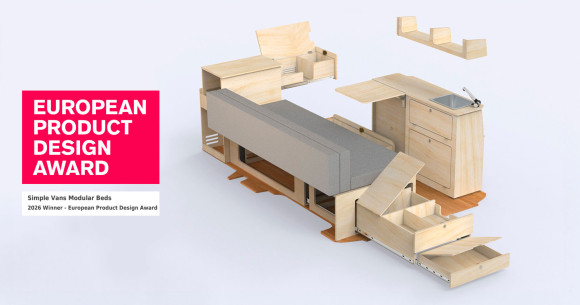
What we can tell you is that our furniture is built to sit inside a conversion you're taking through approval, and it's equally at home in a van that stays a van. That's deliberate. Beds, seating, storage, tables and kitchen units give you the physical living layout either route needs, and where you land on the spectrum is decided by the rest of your build. Which is exactly as it should be, because that decision is yours.
One last thing
VASP feels intimidating mostly because you meet the whole process at once, usually late at night, usually on a forum where everyone contradicts everyone else.
Taken slowly, it's a set of requirements, some paperwork, two appointments and a registration change. People with no technical background do it all the time.
And if you're building something simpler that never actually transforms the vehicle into a motorhome, you may never need any of it. That's not a loophole. That's a van you can travel in, which is a wonderful thing to own.
Answer the question early – has my van actually become a camper? – and everything downstream gets easier.

Compatible with all large vans like the Fiat Ducato, Peugeot Boxer, Citroën Jumper, Renault Master, Opel Movano, Nissan NV400, Mercedes Sprinter, Volkswagen Crafter, Iveco Daily...
Compatible with all large vans like the Fiat Ducato, Peugeot Boxer, Citroën Jumper, Renault Master, Opel Movano, Nissan NV400, Mercedes Sprinter, Volkswagen Crafter, Iveco Daily...
By THEME
SIMPLE VANS
USEFUL INFORMATION & LINKS
Compatible with all large vans like the Fiat Ducato, Peugeot Boxer, Citroën Jumper, Renault Master, Opel Movano, Nissan NV400, Mercedes Sprinter, Volkswagen Crafter, Iveco Daily...
Compatible with all large vans like the Fiat Ducato, Peugeot Boxer, Citroën Jumper, Renault Master, Opel Movano, Nissan NV400, Mercedes Sprinter, Volkswagen Crafter, Iveco Daily...
By THEME
SIMPLE VANS
USEFUL INFORMATION & LINKS
Please sign in first.
Sign in